Two staggering milestones were reached this week: since the beginning of the COVID pandemic, more than 8 million have been infected with the virus. Additionally, a total of 8 million have been touched by another aspect of the pandemic: financially. Of those affected financially, 6 million of those were within the last three months according to NBC News.
As people are still whether the effects of the pandemic recession, little hope for help in the form of a stimulus relief bill is in sight as stimulus talks are still stalled & unlikely to be resolved anytime soon.
Perhaps no group has felt the effects more so than low income minorities. Besides being one of the most vulnerable populations in this pandemic, they are also suffering from the financial effects of the depression.
An even just as marginalized sector are those who don’t have a vote: 16 year-olds who may or may not be able to go to school remotely due to financial hardships and.or are unable to find a job to supplement their family’s earnings at this difficult time.
While those of a more advanced generational membership are dealing with higher mortality rates with COVID-19, the younger generation is dealing with not having a say in a devastated economy that continues to shrink & lose value.
If there is to be any type of economic & political recovery, a stimulus package needs to be passed as soon as possible & more youth need to be enfranchised in order to be able to participate in a more active role in an economy they’re inheriting right before their eyes.
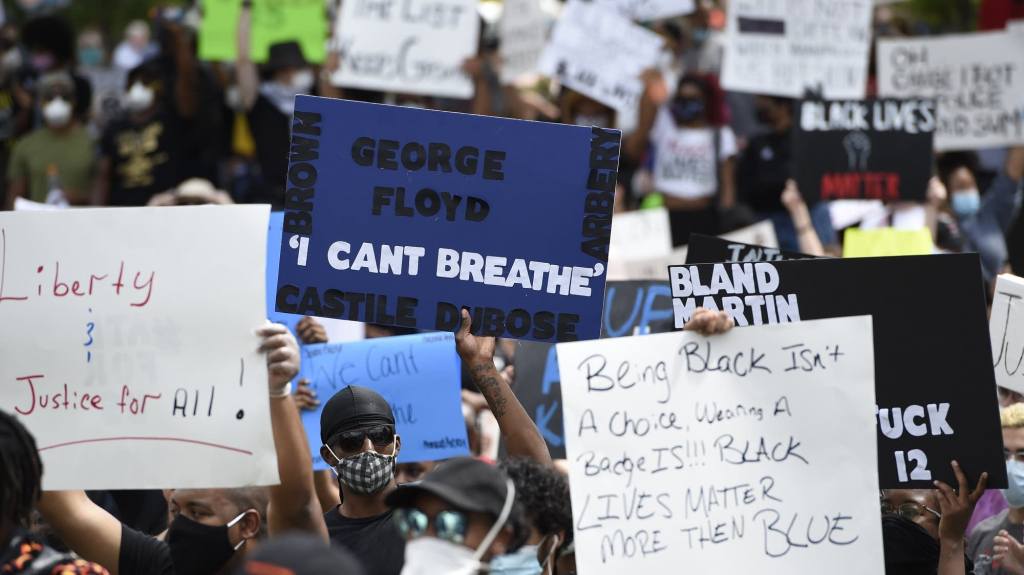
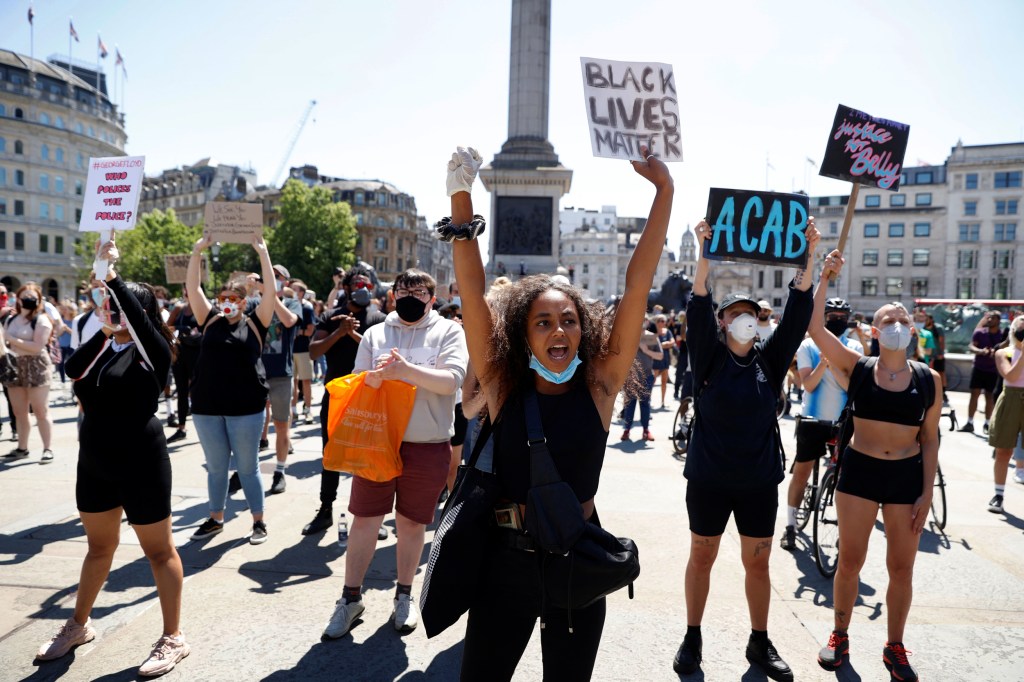
Protesters during the summer. This was a group that protested in light of incident in Minneapolis, Minnesota after the George Floyd tragedy. Similar protests have also occurred this summer as a result of recent police shootings, including the shooting of Jacob Blake in Kenosha, Wisconsin.
With more than half a year into the COVID-19 pandemic, the rate of infections remains steady while casualties are still occurring throughout the U.S. but also around the world. However, while the latter as a whole comprises most of the casualties, the U.S. is by far the top for being the most infectious in the world & the top for most casualties. While this in itself is a tragedy, with various factors contributing to this ongoing pandemic, there is still another “pandemic” going on in the form of racism, and by extension, double standard of disfranchisement of vulnerable or historically marginalized populations. This includes tax paying teenagers who do not have a vote.
While the COVID-19 pandemic has had terrible consequences for those of the advanced age population, especially with those with pre-existing health conditions or health factors that put them at a disadvantage to survive COVID, it has had an effect on young persons as well.
The last school year was anything but normal- many athletic games, in person classes, graduations for many and other significant events in the lives of young people, were cancelled. For many with alternative means of substituting these events, online was the only option, which is completely different than previous experiences of their peers just the year before. This has really made the world feel upside down for people.
One also cannot deny the impact this has had on the economy, fueled by many young individuals either in high school or college, working to supplement their income to pay for bills, help family members, obtain luxury goods and/or all of the above. This is most apparent in the food service industry like fast food & restaurants, where many young people work. Not only have vulnerable populations of people in their 50’s and beyond have had to grapple with loss of income or work, but many young people have likely experienced the same.
The unfortunate tragedy in all of this is, unlike people they know in previous generations like parents, grandparents, mentors or friends, many young people aren’t able to voice their opinions to vote. Despite schools being inaccessible, pressure to start or use alternative means to go to school and even how their tax dollars are spent during this pandemic, many youths don’t have a voice. This needs to change.
Yes, there is currently a pandemic. Yes, it is unsafe to gather in large crowds. But many big cities continue to have protests in support of movements like Black Lives Matter, which is obviously a good thing. However, we should also have something along the lines of youth enfranchisement. This is currently not happening and it is disappointing.
At a time when many people claim to be “woke”, are using online methods to get their point across and are having to deal with the COVID-19 pandemic with friends, family and possibly, with or without social venues like school or a workplace, there is still a lack of “representation” for young voices. The latter is often lumped in with the rest of the protesters voicing their concerns on other issues, the most recent biggest one is police reform.
While this is also a good that needs to be supported, I also argue that we need to work towards societal reform as well, much like several organizations working to lower the voting age are doing. I think if we don’t take a step towards this endeavor soon, eventually, if and when the norms do return, not much will have changed for youth rights and its supporters.
Me with the Kiwanis Club of Perry Township co-presidents Scott and Dale. I spoke at their meeting place on July 23rd about my walk across the U.S. for the Eliminate Project.The club meets every other Thursdays.
Last month, I was able to speak at the Perry Township Kiwanis Club in south Indianapolis, Indiana. I was also there for the Kiwanis International General Council meeting, which was held two days later in downtown Indianapolis. It was held in place of the convention, which was supposed to have been held in June but was cancelled due to the current pandemic.
Although I wasn’t able to speak much about the #16ToVote movement or the project, I was able to speak about my nationwide walk, which help bring more awareness to lowering the voting age to 16.
You can read about my talk and the Perry Township’s post here.
I’ll be speaking about finding more resources during this Coronavirus/COVID-19 epidemic on July 23rd in Indianapolis, Indiana as well as my cross-country walk across the U.S. in 2015. Details to be released soon. Follow @16ToVoteProject for updates!
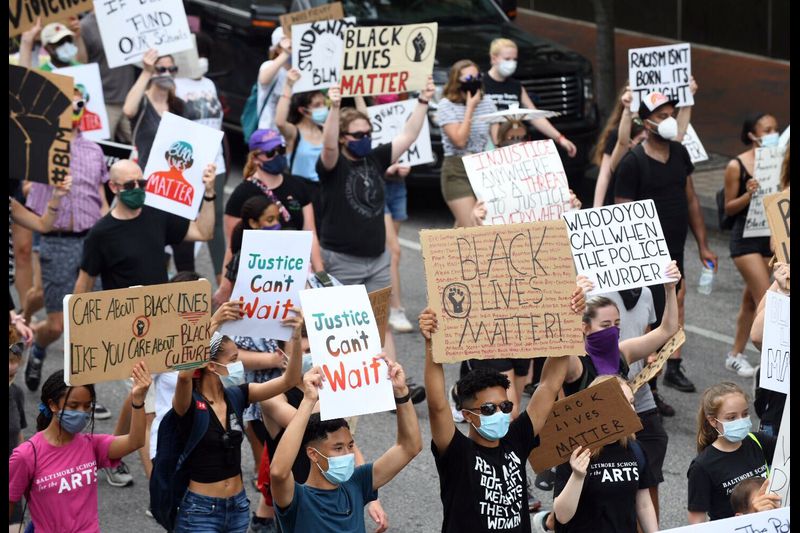
Black Lives Matter and police reform protesters marching in Baltimore, Maryland last week. Protests have intensified in Atlanta, Georgia after the death of Rayshard Brooks. (Photo by Kenneth K. Lam & the Baltimore Sun)
Today marks the 22nd day since George Floyd lost his life. The event that sparked protests nationwide has led to three weeks of non-stop protesting, desspite being in the middle of the Coronavirus pandemic. Many large cities, including St. Paul, Minnesota, the same state where Floyd lost his life, as well as New York City, Los Angeles and many others have seen mixed results from the protests; some have seen extensive damage from protests and looters to police forces showing solidarity with protesters, often posing in photos kneeling with them.
With many Confederate monuments also being toppled at the same time while cities are seeing some slight changes in how police departments are handling emergency calls, one would assume that there is move towards a calmer environment.
Since then, protests have only intensified further after the death of another African-American this past weekend in Atlanta, Georgia. Rayshard Brooks has been the latest casualty in the growing voice of protests and calls to again reform police. Like Minneapolis last month, Atlanta experienced a storm of destruction. Protests continue throughout the U.S. and have largely been peaceful since those responsible for George Flyod’s death have been charged. Nonetheless, it seems unlikely that protests will go away anytime soon.
At the same time, youth contributions have been overlooked, as many of the protest movements themselves are led and populated by younger organizers, like A’niya Taylor. Taylor, who is 16 and a student of Baltimore City College high school, recently worked with the Baltimore School for the Arts in a recent protest last week, who argued for better historical curriculum in schools that provide accurate portrayals of race and racism in the context of history. “It is time we rebuild the foundation of what this country was built on,” Taylor declared. Indeed, voices like Taylor’s are calling not just for police reform, but an educational one as well.
As protests continue to occur, voices like A’niya Taylor’s also represent the ever growing youthfulness of the movement, Very few places in the world, let alone the United States, allow 16 year-olds to vote. Ironically, there’s no law that prohibits 16-year olds from protesting. We’ve seen this with March For Our Lives, Climate Change and now, police reform.
Clearly, rebuilding can only happen when you bring people from all walks of life and experience to the table. This includes all taxpayers, especially those who are 16 years-old and still don’t have a voice and vote. If they can organize a protest to fight for things like climate, police reform and support movements like Black Lives Matter, they certainly deserve to have a vote so they can make real change happen.
People protesting police brutality. It has been almost one week since the protests began, which has led to rioting and looting but also calls for reform. (Photo courtesy of Reuters)
During the midst of the Coronavirus epidemic, calls for reforming the justice system continues throughout the U.S. Protests going on in many cities spanning the entire U.S. geographic region have been calling for justice for George Floyd as well, who lost his life during an arrest at the hands of four police officers last week. The protest originally started in Minneapolis, Minnesota but have since expanded through most large cities in the U.S., including New York City, Los Angeles, Dallas, St. Paul and many other cities.
Even at a time when social distancing should be the norm, it is anything but the norm, as rioting continues to escalate while you see conflicting efforts at preventing the spread of the Coronavirus- while many protesters are wearing facial mask coverings- either to prevent the spread of the virus or to conceal their identity during the protests, but they are also mobilizing in large numbers and in close quarters. Many times, it is to show solidarity, but also as they interact amongst each other and law enforcement, they are often thrown into even closer quarters and spaces as they navigate through the landscape of most major cities.
The events that have led up to this situation were probably unavoidable. As many people are slowly beginning to emerge from quarantine, not much has changed for them. At a time when the nation is facing unprecedented amounts of unemployment, with recent estimates putting that number at 40 million unemployed or almost a quarter of the workforce, old points of contention remain- disparity between the rich and the poor, racial tensions and distrust of the current political system. Many of these contentious issues have once again boiled to the surface, only temporarily hidden behind the watchful eye of the media but not completely forgotten as COVID-19 has temporarily taken center stage. However, as the nation continues to recover from it, old wounds have begun to open up once again.
Although there is no one solution that will fit all situations going on throughout the U.S., there are some basic things that can help get us a solution sooner. The first is to listen. This is clearly missing from upper levels of government, which is why we’re seeing the large public outcry against injustice. Especially when it comes to racial inequality. Racism may never go away. There will always be negative elements in society that plays an antagonistic role. Does that mean people should give up and not fight for racial injustice? Of course not! Otherwise the contributions of people like Martin Luther King Jr. would be for nothing. But this won’t happen unless people listen to the experiences of those who’ve faced injustice themselves. Especially those from voices of color, who’ve suffered at far more disproportionate numbers for so long.
The second is to enfranchise more voters. We should support lowering the voting age to 16. Many countries in the world already have this practice. Even Maryland has several cities that have this practice- and is growing! More cities and states in the U. S. are looking into the idea. One does not need to watch all different sources of news coverage to see that many of the protesters are young people of different races and all walks of life who don’t believe their opinion, much less their life, is valued by the government. Due to the effects of COVID-19, not only are many youth not in school, if their schedule would have allowed them to had COVID-19 not occurred, but they are also the victims of the devastated economy- younger people who were dependent on many food service jobs have been just as affected as those with blue and white collar jobs. They haven’t been able to mobilize for weeks to months in some cases. To see what awaits them in the outside world as was seen that set-off the events of the current protests is less than encouraging- you can start going to the outside world but rather than being fearful of a contagious virus, you’re fearful instead of law enforcement who are supposed to protect you instead of becoming a contributing factor to your death. Many of those experiencing the above are 16. They can loot, protest, post on social media, be affected by the economic downturn, still pay taxes on whatever income they’re earned this year and even face the consequences of their actions, whether that be justly or unjustly like with George Floyd, in regards to the recent riots and protests- but they cannot vote. This is also an injustice that needs to be addressed if any sort of reform is to occur out of these protests.
If more people are enfranchised and can vote on the issues that affect them, then this would lessen some of the frustrations on those protesting injustice. Does this mean it’s a cure-all solution? No, of course not. Injustice will still happen but things can be made better. Will it be a step in the right direction to getting more voices heard? Yes. Should all organizations, people and politicians work together to make #16ToVote happen? I say yes! If you’re reading this should you share this with other organizations and groups out there regardless of where we are in the movement? Yes! This is what’s called progress and collaboration! None of us can do this alone! This is what’s lacking right now and why we’re making little progress. We have an opportunity to do this right here, right now- but only if we work together instead of working separately!
If there’s going to be anything positive to result from 2020, let it be lowering the voting age to 16. But this will only happen if all of us who support the idea come to the table, sit down and discuss things logically like civilized individuals.
It has been one month since I wrote the last blog post regarding the effects of the Coronavirus, or Covid-19. Since then, it seems the condition has worsened but at the same time it has also shown signs of improvement as people practice preventative measures to reduce being exposed to the virus.
As people continue to feel the economic effects of Covid-19, others are finding ways to be productive at home. This is no exception for activists across the U.S., many of who are participating in the Earth Day Live strikes next week. Although the strike won’t take a physical form, it will have a very active social media and online presence.
One such event prior to the Earth Day Live event is this Sunday’s Social Community Series about Vote16 and Voting Rights. Because of the need to avoid large gatherings, the sessions held on a daily basis are a good way to reach out and communicate with other organizations participating in the Earth Day Live Strikes.
If you’re free this Sunday and are a supporter of youth rights, climate issues, voting rights or any and all combination of the above, please thinking about attending the session. Consider letting a friend or two know as well so you can learn more about the #16ToVote movement.
The Coronoavirus, also known as COVID-19, has been unavoidable on the news. But is it unavoidable as a disease? It depends on what you do and how you react. (Photo courtesy of Bethany Lutheran College)
With the recent outbreak in Coronavirus, all facets of life have been impacted, if not brought to a complete standstill. Schools have been closed, many public venues like theaters and sports events cancelled indefinitely and store shelves emptied out. Will life return to normal? That depends on what we do. It is also just as important to think about what we will do afterwards.
How will this impact the #16ToVote Advocacy Project?
I personally have been busy at work making preparations for a contingency plan for how to best continue the work on the #16ToVote Advocacy Project in light of the recent Coronavirus epidemic. I have not made plans to cancel it and still plan to go through with the travel as expected. Obviously, however, some adjustments will need to be made as groups and events I am working with will also have to make adjustments, so I will keep groups that are closely working with me updated on any adjustments that will need to be made.
Obviously one notable change I’ll have to make adjustments for will be events where large gatherings are expected to take place. I may have to switch to digital means for some key dates until I hear back from event organizers. Other than that, the digital and social media strategies I plan to share among the supporting groups should be largely unaffected, since you don’t need to be at the physical locations I’ll be at during the campaign. You just need to be able to access your social media platforms.
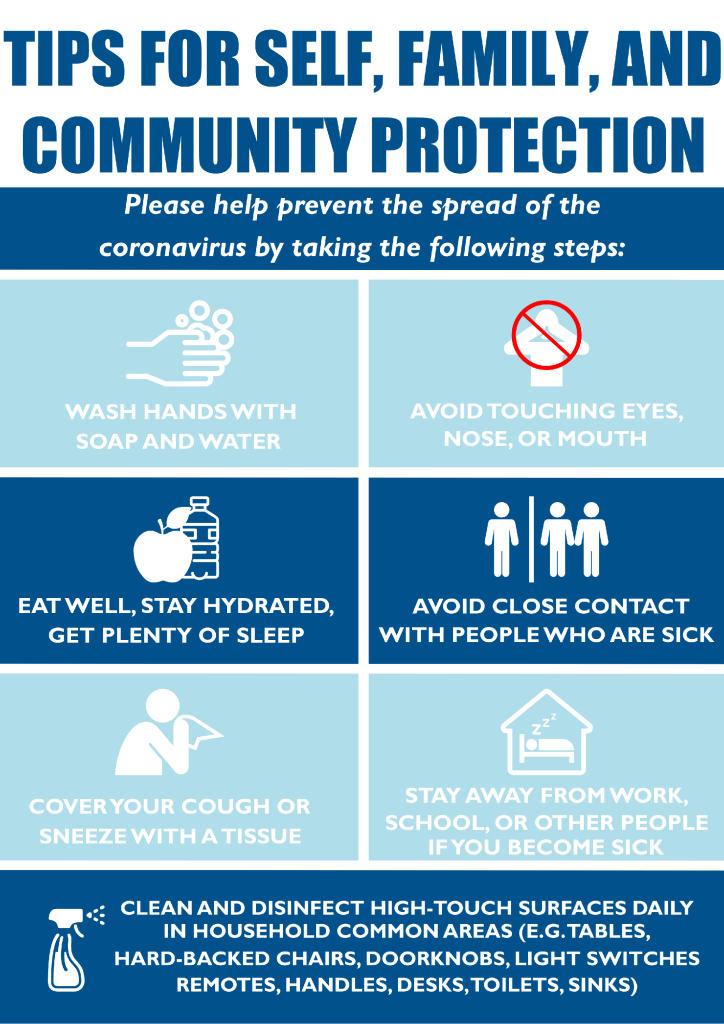
While I work with other groups on contingency plans for the next few days, you can take a few precautions yourself to avoid getting the virus and/or spreading it to someone else by following the simple tips on the chart below.
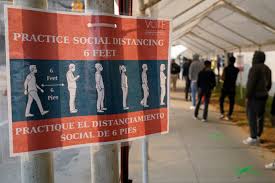
You can also practice other important actions, like social distancing(not social media distancing!) and listening to what your local health and safety providers say about the Coronavirus in your area.
The Coronavirus is a lot like ageism in that there’s a lot of fake information being spread out there that doesn’t help either cause, so it is important to check reliable sources and to debunk fake information. We’ll only overcome both by staying smart, vigilant and informed.
I won’t get into a lengthy post today in regards to the #16ToVote Project, but please do know that I plan to continue it as long as I am able to and will make contingency plans as best as I can to keep the campaign active during this period. Stay tuned for updates and stay safe out there!
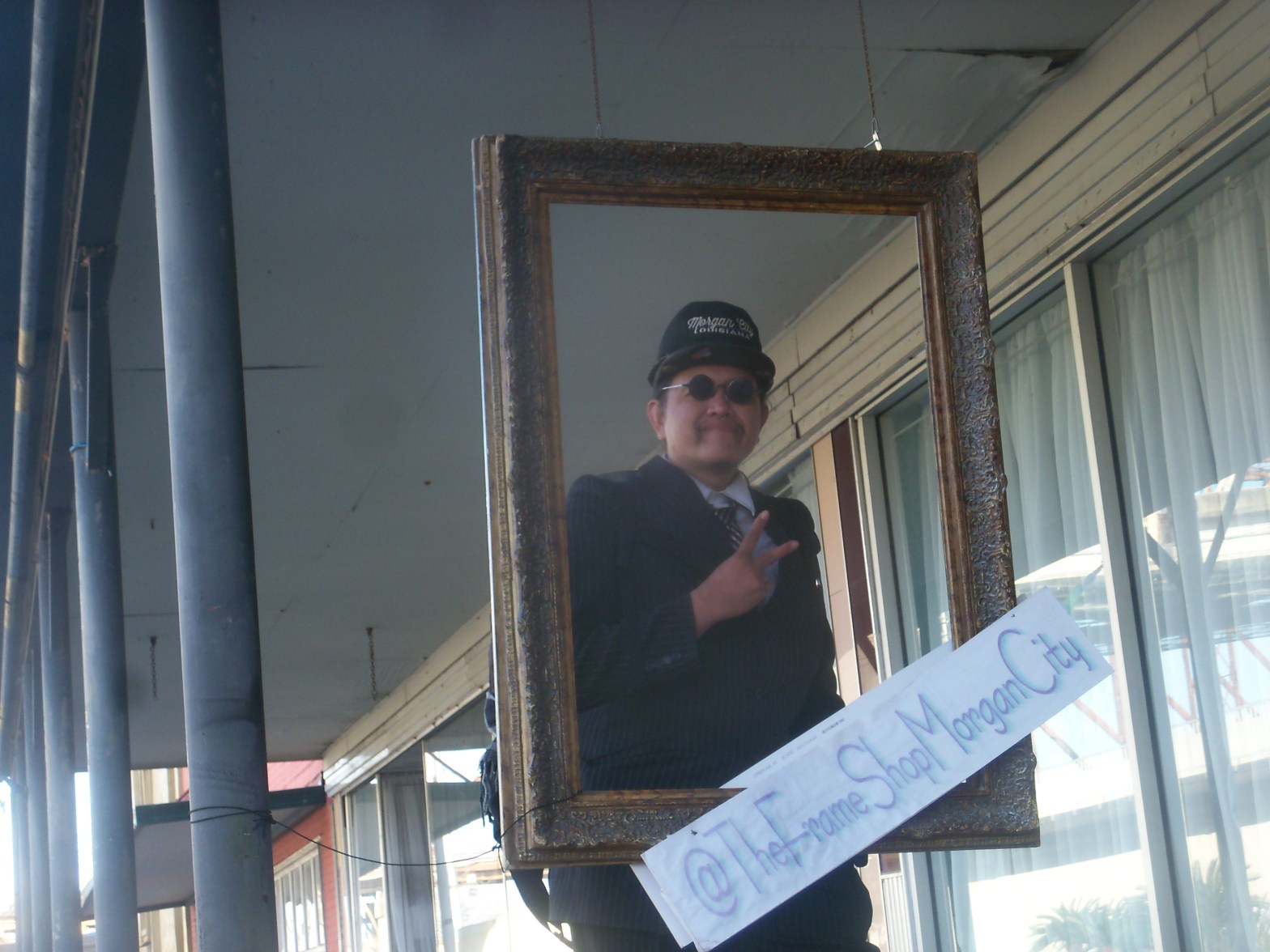
I guess you could say I was “framed” in this outline of a frame for one of the local downtown shops in Morgan City.
Still in Morgan City today. I alternated between Berwick and Morgan City, heading back to Berwick in the earlier part of the day to see stuff I wasn’t able to see because I went in the evening yesterday. I later went back to Morgan City in the afternoon to have lunch at an all you can eat restaurant.
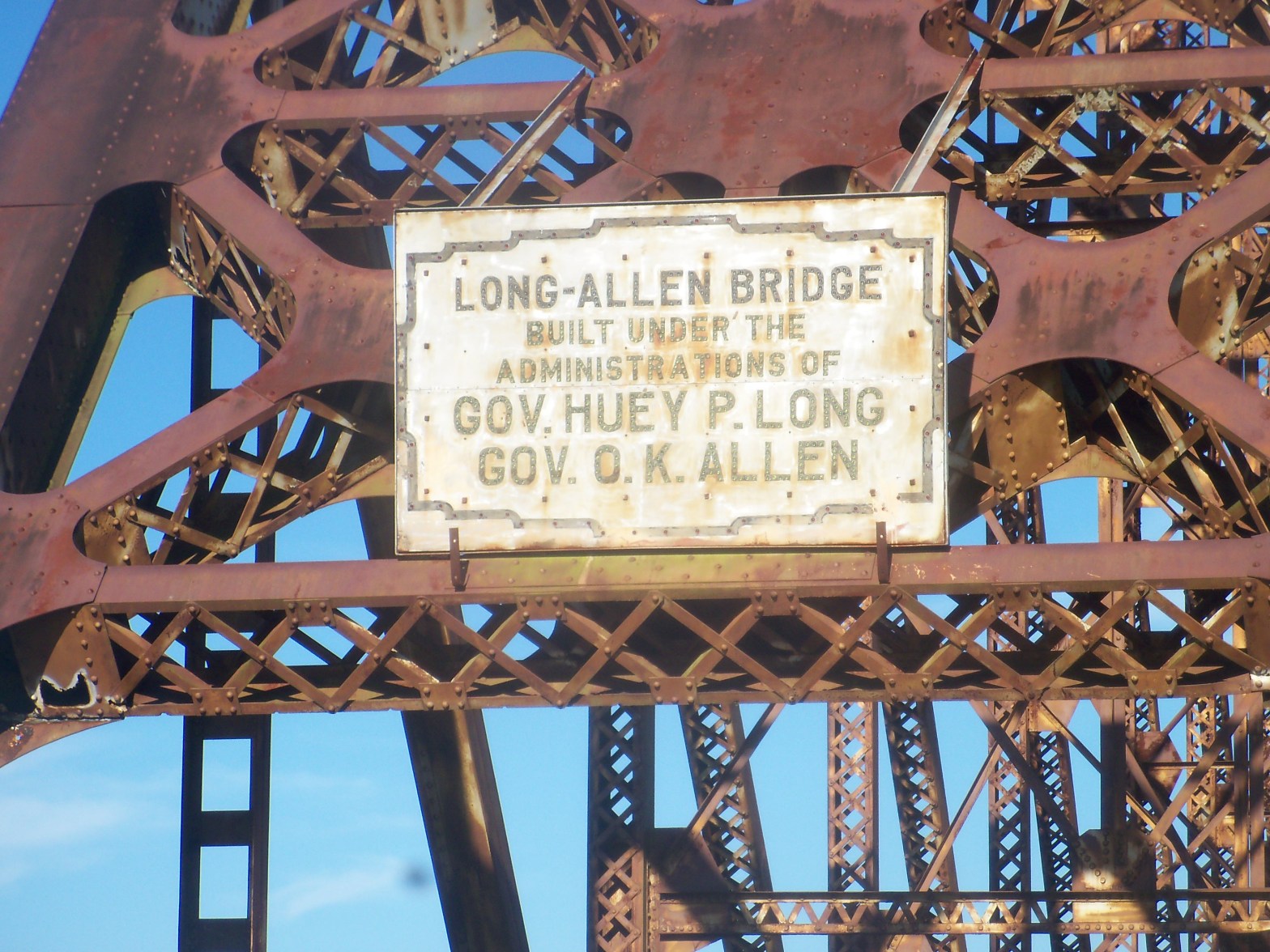
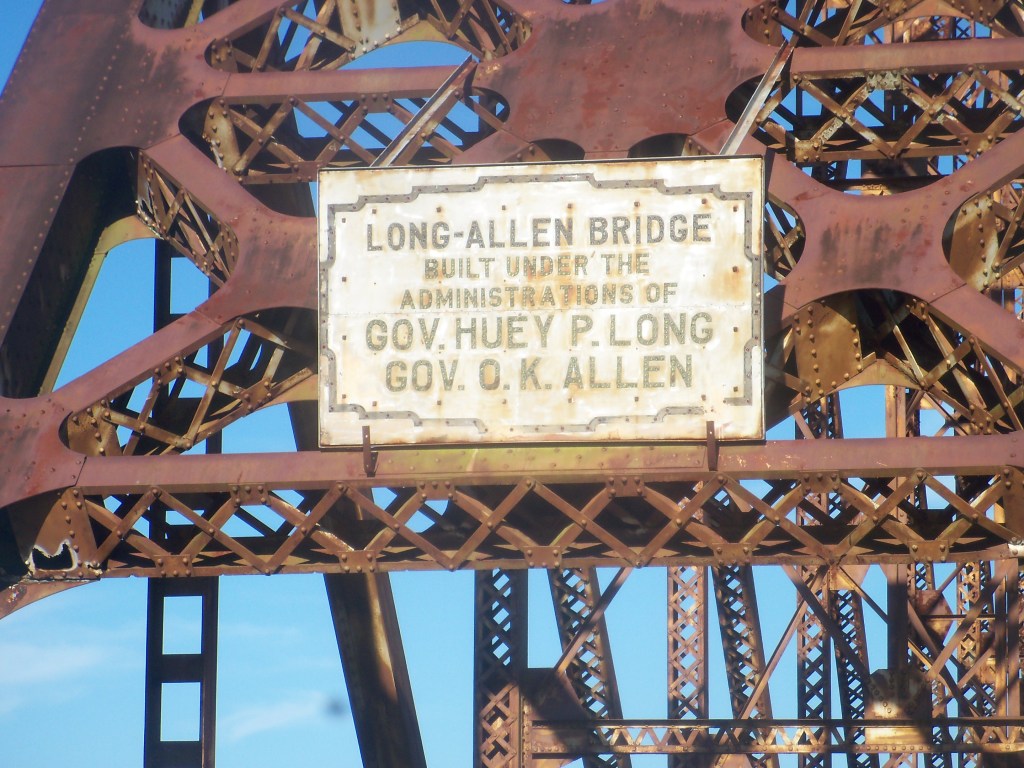
It’s been four days since I got off the train in New Orleans and almost three that I’ve been in Morgan City. Here’s the Long-Allen Bridge that connects Morgan City and Berwick together, high above the Atchafalaya River below it.
Today was more or less a downtime day, like Thursday when I was in between speaking at one club in New Orleans and in Morgan City yesterday, so I decided to explore parts of the town I hadn’t been in yet, as well as head to the adjoining town next door via a pedestrian bridge called Berwick.
Berwick is a really small town, only about half of the size as Morgan City. Although there isn’t much to do other than pass through it if you’re using the 182 Bridge(pictured above), it does have some really friendly people with a few great places to eat, such as Bayou Lagniappe, where you can grab some really great seafood at a great price.
Even though I couldn’t make a presentation today and didn’t do much towards the early campaign for #16ToVote, I did have enjoyable food, got to see more of the local history and landmarks in both Morgan City and Berwick and was able to meet many friendly locals who told me about the two cities local lore and their own personal stories of what being a Louisianian means to them.