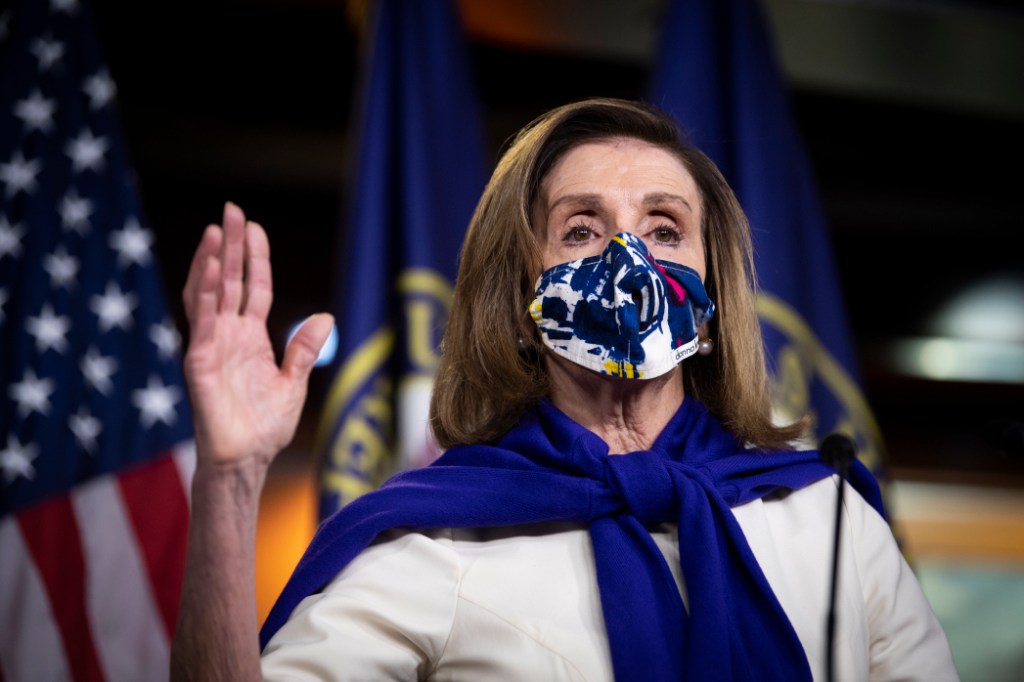
Nancy Pelosi once again takes the Speaker of the House Office oath after her recent narrow victory. This might also be her last term as Speaker of the House as well.
It’s a new year again, which means another year to keep fighting for youth rights and continued enfranchisement.
Even with a new calendar year, there are still challenges that need to be overcome. We’re still in the middle of the COVID-19 pandemic and have only started to begin addressing the issue. It will likely be another year or even more before it will be safe to be able to travel again.
At the same time, we also have a new administration that will be able to enact policy that will hopefully see the enfranchisement of more youth. In one town hall almost two years ago, then presidential candidate and now future Vice President Kamala Harris addressed the idea of lowering the voting age to 16, saying that it should be a discussion to be looked at and have. This town hall occurred just one month after Ayanna Pressley had introduced a bill to the House that failed to pass but still received bipartisan support.
In other relevant news, Nancy Pelosi also narrowly maintains her role as Speaker of the House. However, this may just be her last stint at the position, meaning that unless the next Speaker of the House is also suffrage-friendly towards youth, our working timetable to get anything appreciably done might be in the next two years- this year and next year.
As a supporter of lowering the voting age and enfranchising more youth, both in the United States and elsewhere, I call on all allies of any form of suffrage to take advantage of this window and consider how we can work together too to make sure that we can make some gains within the next two years.
What the allies of youth suffrage might accomplish between now and the end of next year might determine whether or not we will lower the voting age any time soon or have to wait for some of our youngest supporters to get into office themselves many years down the road before we can get another decent opportunity to do so again.
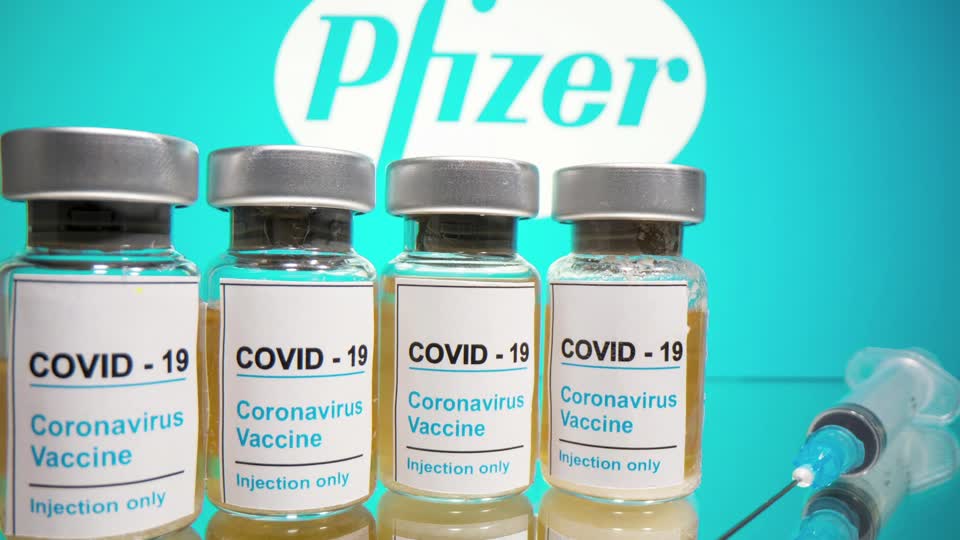
A “shot” of Pfizer COVID-19 vaccine bottles with the Pfizer logo in the background. The Pfizer vaccine has recently been approved for those 16 and older to combat the COVID-19 pandemic.
Today’s the last 16th of 2020 and there’s some good news in regards to the COVID-19 pandemic and possibly, those supporting lowering the voting age to 16.
A few days ago, at the end of last week, Pfizer’s COVID-19 vaccine was approved. Not only do we have a medical tool now available to combat the pandemic, but we’re also a little closer to emerging from local and state lockdowns.
Obviously, it will take some time before we’re in the clear and it will also take a little longer before a sizable number of people are protected from COVID-19. There’s still so much we don’t know about the vaccine- such as do you need to get a shot if you’ve already had COVID-19, does it prevent transmission to others if you happen to get it but have already been inoculated by a vaccine or when less vulnerable populations like healthy people who are not emergency responders will have access to it. Everything in due time.
Not only has the possibility of a vaccine brought hope for those afraid of the effects of COVID-19 on their own personal health, but it also has brought hope for supporters of youth rights, specifically those working to lower the voting age.
How does this help with the overall movement? It’s putting the movement front and center again while lives are being saved. Not only has the vaccine included the disfranchised age, but this opens up dialogue once more politically.
Youth supporters advocating for advancing expanded rights for youth like voting, regardless of their organization affiliation, should try to incorporate this in their own dialogue and think about how we can keep this in the mainstream.
By Pfizer’s vaccine approval, we are showing the importance of youth inclusion in things like vaccine studies and fighting pandemics. This is even more so if they’re given a vote- the pandemic affects young people, albeit in different ways, than old people. Nonetheless, they’re still affected. We should try to find more ways to include them as we fight the pandemic now, but also going forward into 2020.
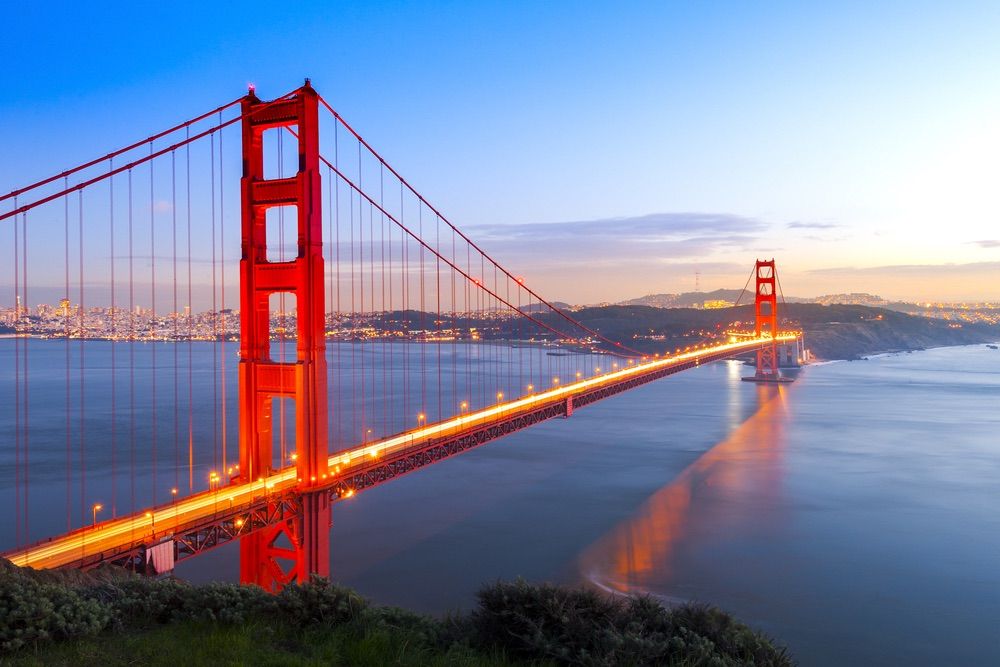
The Golden Gate Bridge in the city of San Francisco. This city has quite a bit of meaning to me personally as well as the #16ToVote Movement. In addition to being Twitter’s HQ where I worked for some time, it’s also the district that Speaker of the House, Nancy Pelosi represents. Pelosi is by far the biggest, but not the only, supporter of lowering the voting age to 16. It’s also the city I completed my nationwide walk in 2015 after walking for nearly four months in order to promote lowering the voting age (I will get to that more later). It’s also where two efforts to lower the voting age have been attempted, most recently being this year. Both attempts have failed so far. Today’s blog will offer commentary as to why I believe this is a failure of collaboration among the different groups advocating for it. & what we need to do if any future attempts are to be successful.
I don’t usually write much on these blogs- readership is usually low. Perhaps you, the reader, can help with this in the future. But for the sake of the movement, & today being the 16th, when I always post one blog in support of lowering the voting age like I have for more than 5 years, and I’m feeling a little chatty today, you’re going to read all my thoughts on the matter, both the good & the bad, on lowering the voting age to 16. While I won’t be abandoning the work on lowering the voting age, I am rather disappointed at certain groups and will be discussing this in a good portion of today’s blog. First off, let’s start about my work, as some readers of today’s blog may not be familiar with me, so take this as sort of an introductory post as well. If you do read one blog post today or one I’ve ever written, make it this one.
So in case you may not be aware, I’m a supporter of lowering the voting age to 16. I’ve been a supporter for more than a decade, ever since I heard one area in Switzerland had lowered it’s voting age sometime in 2006. It was around that time I learned about an organization, NYRA(National Youth Rights Association), and their work. At the time, lowering the voting age to 16 wasn’t really a popular idea or movement. Things like marriage equality/same gender unions itself was in it’s infancy. Although I wanted to join NYRA, being a Californian, the distance to HQ(Washington D.C. at the time, I believe) was intimidating. I was also still a student going to school, so I didn’t have the luxury of traveling. The east coast was just too far away. Additionally, I grew up in a not politically conservative but lifestyle-conservative home, so supporting “fringe” ideas like lowering the voting age would probably not be an easy thing to do, given how young I was at the time and the kinds of values my family held.
Fast forward to the early 2010’s. I was now in college and had seen that NYRA was growing as an organization. They’ve been really active in Maryland as well and I think they tried a few times in Maryland to lower the voting age to 16. We also had something similar a few years before in California, but again, the concept of lowering the voting age was new at the time, so support for it wasn’t as big as compared to today. I was inspired and encouraged by NYRA and other groups working on enfranchising taxpaying youth(because I had my first job at 16 and paid taxes on it like any taxpaying youth), especially after their initial victory in Takoma Park, Maryland in 2013. I saw what I could do to help, but even at that time, finding help in as liberal a state as California was still a difficult endeavor, so I stayed informed but was limited on what I could do.
Fast forward just a few years- 2014-2015-ish. I had joined a service club called Kiwanis(similar to Lions, Rotary, etc.) after graduating college. I’m a big supporter of volunteering and wanted to help my community. I also learned that Kiwanis was fundraising for a charity they were working on with UnicefUSA(the people who do trick-or-treating with UNICEF each year). I also learned that Kiwanis, internationally, was going to celebrate it’s 100th anniversary in 2015. Based on all the information I had at the time, I decided I was going to walk across the United States. One of those reasons was because I also wanted to open dialogue for lowering the voting age to 16 in addition to raising money for the said charity(info can found here). A had read a few people had done something similar around that time, so I figured I would do the same.
For nearly four difficult months, from May to September of 2015, I trekked, literally, from sea to shining sea, by foot, to get from New York City, NY to San Francisco, CA. I lived off mostly donations, because I was not able to save much prior to it and depended on the generosity of clubs I traveled to and strangers to help me get by at many points of my travels. During that time, I also endured weather, isolation/loneliness, bug bites & uncertainty, in order to promote lowering the voting age and raise money for Kiwanis/UnicefUSA.
On the eve of Labor Day weekend 2015, I had completed my nearly 4,000 mile trek, reaching San Francisco just a week after September(route wasn’t exactly east to west and I opted for a longer route). Shortly thereafter, I not only learned that I became the largest fundraising individual of the charity, but I also brought more attention to lowering the voting age than I thought- Speaker Nancy Pelosi apparently first advocated for lowering the voting age to 16 during my walk, in August of 2015. That was the first time it had national coverage and had an endorsing politician to do so. Like I mentioned earlier, we’ve had smaller local stuff in California, like Takoma Park & Hyattsville in Maryland did, but nothing of this magnitude before. I’d like to think in some way, in some brief instant, Speaker Pelosi saw a story about a person walking across the United States and was compelled to make that statement. I want to believe I had played some role in that happening. Other groups also emerged around this time that advocated for lowering the voting age, which was something I hadn’t expected. I was glad we were growing.
Of course, just because someone says something, it doesn’t mean it will happen. Even with the Speaker of the House advocating for a lowered voting age, it wouldn’t automatically happen. I wasn’t expecting this either. There’s work to be involved, so I was always looking for new ways to make lowering the voting age to 16 more likely to happen. I decided I would reach out to some of the different groups that had emerged.
After my walk, I was approached by a few other places as well. Twitter for instance was one notable group. I took up their offer because of how close they were to where I lived & was able to work with them for a few years. Not as an employee, but as an insider of sorts, getting a preview of what’s happening on the platform while also getting a heads up on future innovations(much of what you see today was stuff I previewed way back then, but wasn’t released until recently- implementation can take time…). Although I no longer work with Twitter to this extent, I do value my time there and learned plenty, most importantly the way things “trended” on the platform. Another reason I took the offer was because I was also interested in helping promote lowering the voting age through the hashtag “#16ToVote”, which NYRA has actually been doing for many years, and other movements had taken up. Hence, the hashtag of choice when I made Tweetstorm kits for events about lowering the voting age to 16, as well as the namesake of this blog and one of my Twitter accounts that I use to promote the movement. However, I had a less than pleasant experience, from my perspective, from what I thought would be one of the larger supporters of the movement and one that I thought would have been more helpful than not.
After my walk across the U.S., I noticed groups began emerging around the idea of lowering the voting age to 16. There were a few here and there and some were larger than others. Seeing how I was just fresh from a nationwide walk to promote the idea, I approached one organization. I was then disappointed that said organization refused to collaborate with me and didn’t want my “help”. The following year was when San Francisco first started calling for lowering the voting age through Prop. F. We all know how that resulted- it was close, but it failed.
Two years had passed. It was now 2018. First, the tragedy in Las Vegas happened just a few months prior, in late 2017. Then the unfortunate incident at Parkland, Florida happened just a few months later, in February. That year saw a blue political wave, as people became fed up with students having to risk life & limb for an education, as well as a need for better regulation on firearms. The House saw a large growth of freshmen Democrats. Even one of the most conspicuous of the Parkland students affected by the tragedy, David Hogg, who is often seen as one of the faces of the tragedy and main spokespersons, supported lowering the voting age to 16. In fact, he’s done so numerous times as well. Even many of Hogg’s immediate circle from Parkland also support the idea. Not only do youths not have a say in where their tax dollars are spent, but they don’t even have a say in their own safety while at school. Unless you’re lucky enough to be in Berkeley, CA and a few other places where school board elections have lowered the voting age to 16, you won’t be able to have much of a say in your local school board. This is even more critical due to COVID-19, which I won’t go into here. Just know youth are also suffering as well- through health problems of their own, loss of work, school issues because of the pandemic, & unfortunately, even family tragedy as you read this. But they don’t have a vote on these and other issues that are affecting them today.
Last year marked a change or shift in the national dialogue. Not only had Speaker Pelosi once again called for lowering the voting age to 16 a second time, but one of the “Squad’s” “Freshman Four”, Ayanna Pressley, also introduced legislation that would have lowered the voting age to 16 on a national scale, a consequence of the “Blue Wave”. Obviously, that didn’t pass, but it did get bi-partisan support- even a Republican voted in favor of it. This shows the idea isn’t a partisan thing, but that we want all taxpaying youths who contribute to their local and national economy to have a vote. Now imagine if it had the support of all the organizations, representatives and people reading this right now. Now imagine if after reading this we actually worked together instead of working in our own separate worlds. This movement is far bigger than any one of us and we’re all not working in a vacuum- what each of us contributes helps the general movement, whatever resource that is. At this time, it’s still lacking & we need to collaborate more.
With the change in focus on a more collaborative endeavor, as well as renewed calls by Pelosi and new voices like Ayanna Pressley, I sought to once again try to see if I could unite all the different groups working to lower the voting age to 16. By now, there were even more groups than 2015, but obviously the big names were still priority contacts. I went back knocking on a few online doors to see if I would get a different response than the one I received in 2015/2016. Sad to say, nothing had changed. This was in late 2019, long before the effects of COVID-19. Now, we’re at where we were at with Prop. G, much like Prop. F four years ago, it has once again failed. Should we wait for “Prop. H”(assuming if that’s what it’s to be called based on the nomenclature pattern, if there even is going to be one) the next time around, whenever that may be? Should we all work in our own separate little bubble and hope that we don’t have to collaborate with others that could potentially connect us with additional supporters? Does anyone believe I will “knock” a third time to reach out to reach out to the same people, to the same organization that refuses to work with me(see pic below)? For the latter, this will depend on how those who are currently working on the movement decide to move forward. I cannot change people’s minds if they don’t decide to listen first. I would answer “No” to the above questions I posed. I hope you will too.
In closing, I want to make a few simple, yet understandable statements that you can understand no matter where you are in the movement, from simple supporter like myself, to the most well-connected president/CEO/etc. of an organization supporting it:
First, I’m not a know-it-all. I don’t claim to be nor will I ever claim to be one. I learn something new each day. I want to make very clear that I don’t consider my contributions any superior to any group or movement reading this. However, at the same time, I don’t want to be knocked off & brushed off as if I know nothing about the movement and just an insignificant contributor- not unless you’ve literally walked close to 4,000 miles in my shoes or have social media technical know-how to make a difference in a movement that you only just joined recently. I may not be the oldest supporter of the movement, nor the one who’s supported it the longest, but I’ve been around for quite a while to know what works & what doesn’t.
Second, as the current model stands, which is to work in our own separate little corners, I am here to tell you that it is not sustainable- wehave to work together. This statement is obviously not aimed at all movements. Some are very collaborative and helpful, and I’ve gotten to know many members from some of these groups. They know who they are. But some collaboration, or at the very least, a listening ear, would be helpful. We might not always agree on everything, but we can share vital resources with one another that will help the general movement.
In both of the points I made above, working together is the solution. As a general movement, yes, we are growing. But, also as a growing movement, we are also not collaborating all that well. Look at the example for climate change and how big their movement is, as well as the one for March For Our Lives a few years ago. An even more recent example is the Black Lives Matter Movement(BLM). That is what I want the #16ToVote movement to reach. That’s just not happening at our current level, and I believe not collaborating in a meaningful way with a clear, cohesive strategy has been detrimental to the success of lowering the voting age in areas open to it. Again, I have ideas that might be useful, but if you’re not going to hear me out, it helps no one.
I’m willing to sit down and talk with whoever is willing to listen. I will listen to you as well and hear what you have to say, but I’ll be least likely to listen if you brush me off if I promote trying to work together. I cannot reach out to you if you’re not willing to listen nor collaborate. I’m not here to cause trouble or make fun of your strategy or way of doing things. I’m here to see how I can help your movement and supplement it. Want to help? Email me; call me; talk to me. Strategize & communicate! I have various ideas on how we can make it happen. Let’s reach an understanding. I’m a pretty easy person to reach. I may not always get back to you right away, but barring a technical issue or some other unforeseen event, I’m more likely to get back to you if it’s an important matter. But don’t shut me down without having to hear what I have to say first or belittle my thoughts. Obviously, things don’t happen overnight. Yeah, I get that. I think most of us do. Refusing to collaborate among an already small group of supporters scattered throughout the U.S. is not understandable. It’s not smart- it’s just insane! As a great mind once said:
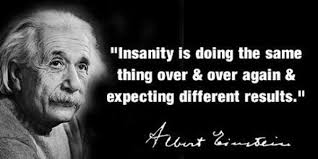
“Insanity is doing the same thing over & over again & expecting different results.”
-Albert Einstein
As Einstein said above, I’m not insane but a rational person, with rational, strategic approaches and ideas that may benefit movements that support lowering the voting age. I’m also a big believer in second chances when it comes to reaching out to others, even those that have turned me down the first time. However, not so much so in third ones. & if you finally do reach out to me after that, there should be a compelling reason why.
I’m not asking anyone to join or leave an organization- having a diverse mix of organizations focused on an issue here or there is fine. In fact, it’s great because it shows the various reasons why we have a common goal- there are many issues that could used additional enfranchised voices. But we have vast reserves of untapped potential and resources that aren’t being used effectively. There has to be some element of collaboration if there is any hope for enfranchising more voters, especially 16-year old voters who don’t have a vote. We need to stop working in our own little separate corners today & work together by reaching out to other movements & supporters, no matter how small, to enfranchise the future leaders of tomorrow– who are depending on us to get our acts together. Help me help you. Don’t disappoint the next leaders of democracy!
Two staggering milestones were reached this week: since the beginning of the COVID pandemic, more than 8 million have been infected with the virus. Additionally, a total of 8 million have been touched by another aspect of the pandemic: financially. Of those affected financially, 6 million of those were within the last three months according to NBC News.
As people are still whether the effects of the pandemic recession, little hope for help in the form of a stimulus relief bill is in sight as stimulus talks are still stalled & unlikely to be resolved anytime soon.
Perhaps no group has felt the effects more so than low income minorities. Besides being one of the most vulnerable populations in this pandemic, they are also suffering from the financial effects of the depression.
An even just as marginalized sector are those who don’t have a vote: 16 year-olds who may or may not be able to go to school remotely due to financial hardships and.or are unable to find a job to supplement their family’s earnings at this difficult time.
While those of a more advanced generational membership are dealing with higher mortality rates with COVID-19, the younger generation is dealing with not having a say in a devastated economy that continues to shrink & lose value.
If there is to be any type of economic & political recovery, a stimulus package needs to be passed as soon as possible & more youth need to be enfranchised in order to be able to participate in a more active role in an economy they’re inheriting right before their eyes.
Protesters during the summer. This was a group that protested in light of incident in Minneapolis, Minnesota after the George Floyd tragedy. Similar protests have also occurred this summer as a result of recent police shootings, including the shooting of Jacob Blake in Kenosha, Wisconsin.
With more than half a year into the COVID-19 pandemic, the rate of infections remains steady while casualties are still occurring throughout the U.S. but also around the world. However, while the latter as a whole comprises most of the casualties, the U.S. is by far the top for being the most infectious in the world & the top for most casualties. While this in itself is a tragedy, with various factors contributing to this ongoing pandemic, there is still another “pandemic” going on in the form of racism, and by extension, double standard of disfranchisement of vulnerable or historically marginalized populations. This includes tax paying teenagers who do not have a vote.
While the COVID-19 pandemic has had terrible consequences for those of the advanced age population, especially with those with pre-existing health conditions or health factors that put them at a disadvantage to survive COVID, it has had an effect on young persons as well.
The last school year was anything but normal- many athletic games, in person classes, graduations for many and other significant events in the lives of young people, were cancelled. For many with alternative means of substituting these events, online was the only option, which is completely different than previous experiences of their peers just the year before. This has really made the world feel upside down for people.
One also cannot deny the impact this has had on the economy, fueled by many young individuals either in high school or college, working to supplement their income to pay for bills, help family members, obtain luxury goods and/or all of the above. This is most apparent in the food service industry like fast food & restaurants, where many young people work. Not only have vulnerable populations of people in their 50’s and beyond have had to grapple with loss of income or work, but many young people have likely experienced the same.
The unfortunate tragedy in all of this is, unlike people they know in previous generations like parents, grandparents, mentors or friends, many young people aren’t able to voice their opinions to vote. Despite schools being inaccessible, pressure to start or use alternative means to go to school and even how their tax dollars are spent during this pandemic, many youths don’t have a voice. This needs to change.
Yes, there is currently a pandemic. Yes, it is unsafe to gather in large crowds. But many big cities continue to have protests in support of movements like Black Lives Matter, which is obviously a good thing. However, we should also have something along the lines of youth enfranchisement. This is currently not happening and it is disappointing.
At a time when many people claim to be “woke”, are using online methods to get their point across and are having to deal with the COVID-19 pandemic with friends, family and possibly, with or without social venues like school or a workplace, there is still a lack of “representation” for young voices. The latter is often lumped in with the rest of the protesters voicing their concerns on other issues, the most recent biggest one is police reform.
While this is also a good that needs to be supported, I also argue that we need to work towards societal reform as well, much like several organizations working to lower the voting age are doing. I think if we don’t take a step towards this endeavor soon, eventually, if and when the norms do return, not much will have changed for youth rights and its supporters.
Me with the Kiwanis Club of Perry Township co-presidents Scott and Dale. I spoke at their meeting place on July 23rd about my walk across the U.S. for the Eliminate Project.The club meets every other Thursdays.
Last month, I was able to speak at the Perry Township Kiwanis Club in south Indianapolis, Indiana. I was also there for the Kiwanis International General Council meeting, which was held two days later in downtown Indianapolis. It was held in place of the convention, which was supposed to have been held in June but was cancelled due to the current pandemic.
Although I wasn’t able to speak much about the #16ToVote movement or the project, I was able to speak about my nationwide walk, which help bring more awareness to lowering the voting age to 16.
You can read about my talk and the Perry Township’s post here.
I’ll be speaking about finding more resources during this Coronavirus/COVID-19 epidemic on July 23rd in Indianapolis, Indiana as well as my cross-country walk across the U.S. in 2015. Details to be released soon. Follow @16ToVoteProject for updates!
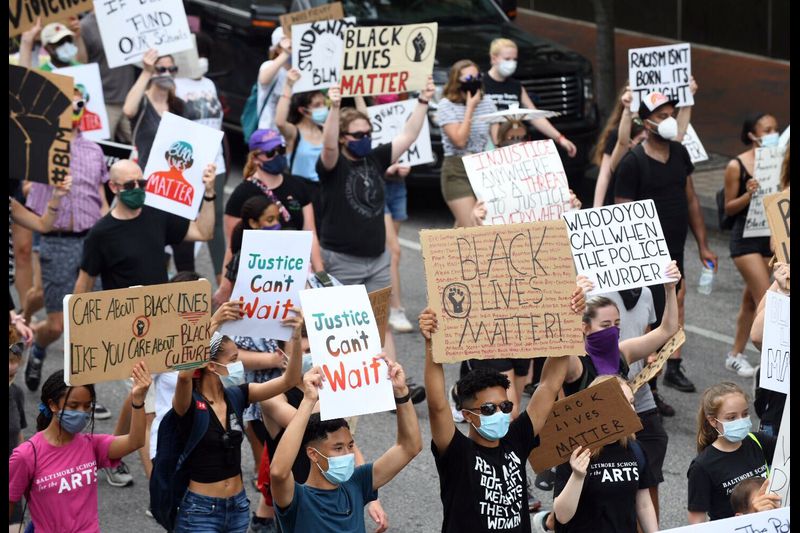
Black Lives Matter and police reform protesters marching in Baltimore, Maryland last week. Protests have intensified in Atlanta, Georgia after the death of Rayshard Brooks. (Photo by Kenneth K. Lam & the Baltimore Sun)
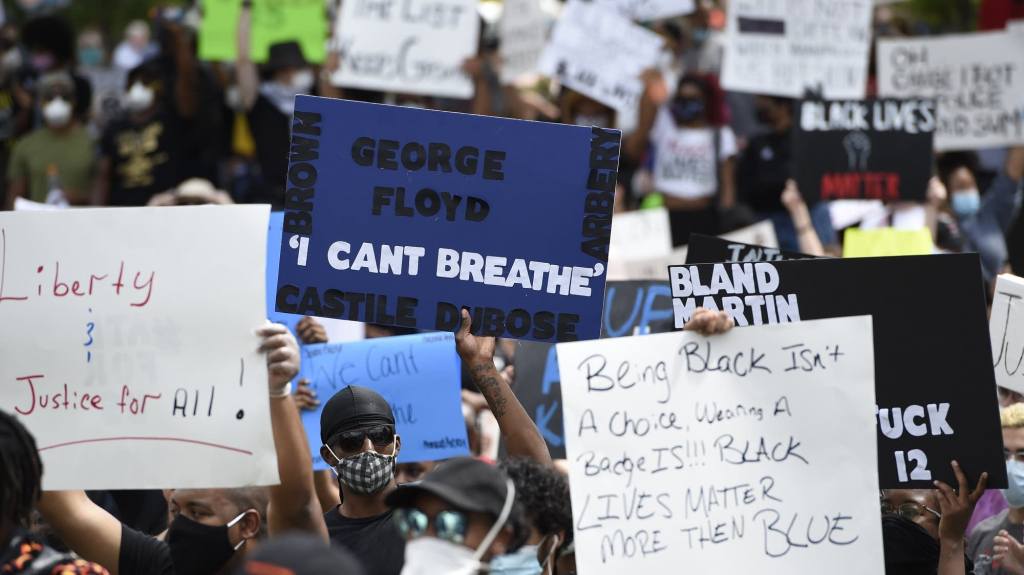
Today marks the 22nd day since George Floyd lost his life. The event that sparked protests nationwide has led to three weeks of non-stop protesting, desspite being in the middle of the Coronavirus pandemic. Many large cities, including St. Paul, Minnesota, the same state where Floyd lost his life, as well as New York City, Los Angeles and many others have seen mixed results from the protests; some have seen extensive damage from protests and looters to police forces showing solidarity with protesters, often posing in photos kneeling with them.
With many Confederate monuments also being toppled at the same time while cities are seeing some slight changes in how police departments are handling emergency calls, one would assume that there is move towards a calmer environment.
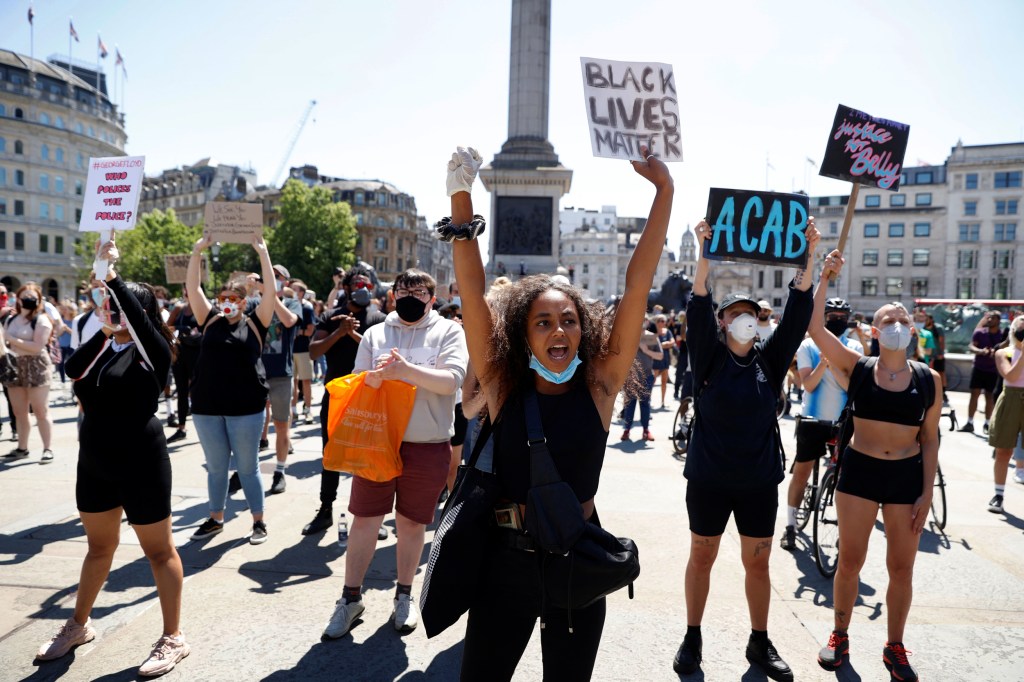
Since then, protests have only intensified further after the death of another African-American this past weekend in Atlanta, Georgia. Rayshard Brooks has been the latest casualty in the growing voice of protests and calls to again reform police. Like Minneapolis last month, Atlanta experienced a storm of destruction. Protests continue throughout the U.S. and have largely been peaceful since those responsible for George Flyod’s death have been charged. Nonetheless, it seems unlikely that protests will go away anytime soon.
At the same time, youth contributions have been overlooked, as many of the protest movements themselves are led and populated by younger organizers, like A’niya Taylor. Taylor, who is 16 and a student of Baltimore City College high school, recently worked with the Baltimore School for the Arts in a recent protest last week, who argued for better historical curriculum in schools that provide accurate portrayals of race and racism in the context of history. “It is time we rebuild the foundation of what this country was built on,” Taylor declared. Indeed, voices like Taylor’s are calling not just for police reform, but an educational one as well.
As protests continue to occur, voices like A’niya Taylor’s also represent the ever growing youthfulness of the movement, Very few places in the world, let alone the United States, allow 16 year-olds to vote. Ironically, there’s no law that prohibits 16-year olds from protesting. We’ve seen this with March For Our Lives, Climate Change and now, police reform.
Clearly, rebuilding can only happen when you bring people from all walks of life and experience to the table. This includes all taxpayers, especially those who are 16 years-old and still don’t have a voice and vote. If they can organize a protest to fight for things like climate, police reform and support movements like Black Lives Matter, they certainly deserve to have a vote so they can make real change happen.
People protesting police brutality. It has been almost one week since the protests began, which has led to rioting and looting but also calls for reform. (Photo courtesy of Reuters)
During the midst of the Coronavirus epidemic, calls for reforming the justice system continues throughout the U.S. Protests going on in many cities spanning the entire U.S. geographic region have been calling for justice for George Floyd as well, who lost his life during an arrest at the hands of four police officers last week. The protest originally started in Minneapolis, Minnesota but have since expanded through most large cities in the U.S., including New York City, Los Angeles, Dallas, St. Paul and many other cities.
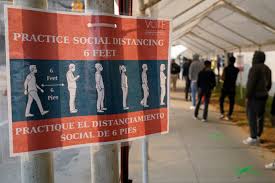
Even at a time when social distancing should be the norm, it is anything but the norm, as rioting continues to escalate while you see conflicting efforts at preventing the spread of the Coronavirus- while many protesters are wearing facial mask coverings- either to prevent the spread of the virus or to conceal their identity during the protests, but they are also mobilizing in large numbers and in close quarters. Many times, it is to show solidarity, but also as they interact amongst each other and law enforcement, they are often thrown into even closer quarters and spaces as they navigate through the landscape of most major cities.
The events that have led up to this situation were probably unavoidable. As many people are slowly beginning to emerge from quarantine, not much has changed for them. At a time when the nation is facing unprecedented amounts of unemployment, with recent estimates putting that number at 40 million unemployed or almost a quarter of the workforce, old points of contention remain- disparity between the rich and the poor, racial tensions and distrust of the current political system. Many of these contentious issues have once again boiled to the surface, only temporarily hidden behind the watchful eye of the media but not completely forgotten as COVID-19 has temporarily taken center stage. However, as the nation continues to recover from it, old wounds have begun to open up once again.
Although there is no one solution that will fit all situations going on throughout the U.S., there are some basic things that can help get us a solution sooner. The first is to listen. This is clearly missing from upper levels of government, which is why we’re seeing the large public outcry against injustice. Especially when it comes to racial inequality. Racism may never go away. There will always be negative elements in society that plays an antagonistic role. Does that mean people should give up and not fight for racial injustice? Of course not! Otherwise the contributions of people like Martin Luther King Jr. would be for nothing. But this won’t happen unless people listen to the experiences of those who’ve faced injustice themselves. Especially those from voices of color, who’ve suffered at far more disproportionate numbers for so long.
The second is to enfranchise more voters. We should support lowering the voting age to 16. Many countries in the world already have this practice. Even Maryland has several cities that have this practice- and is growing! More cities and states in the U. S. are looking into the idea. One does not need to watch all different sources of news coverage to see that many of the protesters are young people of different races and all walks of life who don’t believe their opinion, much less their life, is valued by the government. Due to the effects of COVID-19, not only are many youth not in school, if their schedule would have allowed them to had COVID-19 not occurred, but they are also the victims of the devastated economy- younger people who were dependent on many food service jobs have been just as affected as those with blue and white collar jobs. They haven’t been able to mobilize for weeks to months in some cases. To see what awaits them in the outside world as was seen that set-off the events of the current protests is less than encouraging- you can start going to the outside world but rather than being fearful of a contagious virus, you’re fearful instead of law enforcement who are supposed to protect you instead of becoming a contributing factor to your death. Many of those experiencing the above are 16. They can loot, protest, post on social media, be affected by the economic downturn, still pay taxes on whatever income they’re earned this year and even face the consequences of their actions, whether that be justly or unjustly like with George Floyd, in regards to the recent riots and protests- but they cannot vote. This is also an injustice that needs to be addressed if any sort of reform is to occur out of these protests.
If more people are enfranchised and can vote on the issues that affect them, then this would lessen some of the frustrations on those protesting injustice. Does this mean it’s a cure-all solution? No, of course not. Injustice will still happen but things can be made better. Will it be a step in the right direction to getting more voices heard? Yes. Should all organizations, people and politicians work together to make #16ToVote happen? I say yes! If you’re reading this should you share this with other organizations and groups out there regardless of where we are in the movement? Yes! This is what’s called progress and collaboration! None of us can do this alone! This is what’s lacking right now and why we’re making little progress. We have an opportunity to do this right here, right now- but only if we work together instead of working separately!
If there’s going to be anything positive to result from 2020, let it be lowering the voting age to 16. But this will only happen if all of us who support the idea come to the table, sit down and discuss things logically like civilized individuals.
It has been one month since I wrote the last blog post regarding the effects of the Coronavirus, or Covid-19. Since then, it seems the condition has worsened but at the same time it has also shown signs of improvement as people practice preventative measures to reduce being exposed to the virus.
As people continue to feel the economic effects of Covid-19, others are finding ways to be productive at home. This is no exception for activists across the U.S., many of who are participating in the Earth Day Live strikes next week. Although the strike won’t take a physical form, it will have a very active social media and online presence.
One such event prior to the Earth Day Live event is this Sunday’s Social Community Series about Vote16 and Voting Rights. Because of the need to avoid large gatherings, the sessions held on a daily basis are a good way to reach out and communicate with other organizations participating in the Earth Day Live Strikes.
If you’re free this Sunday and are a supporter of youth rights, climate issues, voting rights or any and all combination of the above, please thinking about attending the session. Consider letting a friend or two know as well so you can learn more about the #16ToVote movement.

 #16ToVoteAdvocacyProject