Juneteeth #16ToVote

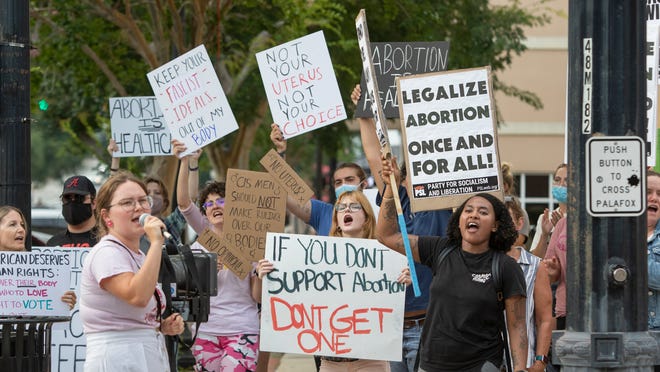
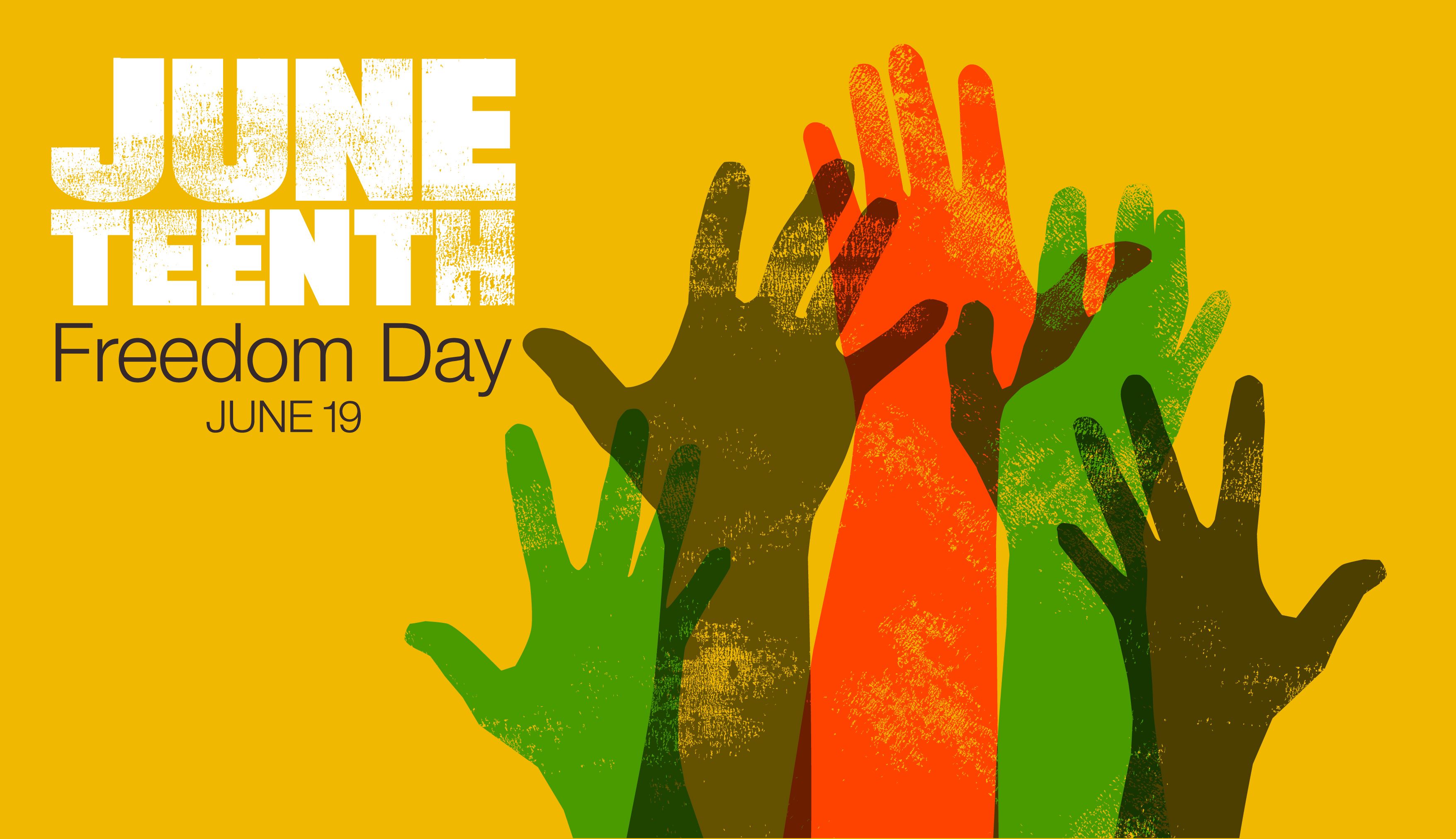
A graphic used to announce the Juneteenth observance. Although it was on Sunday, June 19th, it is observed on Monday, the 20th.(photo source)

Today’s blog might be redundant, but the continued fight for basic civil rights bears repeating. On this Juneteenth observance day, one should remember many in society today that were not afforded voting, democratic rights simply because of their status in life. These include gender, racial/ethnicity factors, ownership of property and many other disqualifying factors.

Even in an era where Martin Luther King Jr., Rosa Parks, Elizabeth Cady Stanton and other civil rights pioneers are household names, and many people are now beginning to realize the importance of Juneteenth observations, democracy still isn’t a democracy unless those who have a stake in not only current events get a voice, but future events as well. Today, that new frontier of enfranchisement is getting the vote for those 16 years old who have been paying taxes to the government towards the income they earn; being affected by many global issues that they will inherit as democratic leaders; & being the ones to need to find solutions to these problems that current leaders may either be unable to or unwilling to solve at this time, only to pass the buck to the generation after them without care to pass on their insight and even resources to address.

Rather than going through all the reasons why expanding youth enfranchisement is important, I should remind readers that there are already 45 previous editions of this monthly blog that discusses the merits, advantages to democracy as well as the overall improvement of democracy that shows why we should lower the voting age to 16.

All throughout the world, individual movements are beginning to gather to see how we can best coordinate those efforts. As last month’s blog shows, there is a global collaborative working together across various regions to see how we can best help each other.

If the people we’re helping to enfranchise now, and conversely working with us to help enfranchise themselves, are one day going to be the same people working to make the world a better place in their respective regions around the world, then the efforts we’re working on now to lower the voting age should be one of the ways we can participate in the democratic process as well as train future leaders on how to work with their global counterparts.

Jеstеr Jеrsеy

DavisKiwanian@mail.com

Vote16 Across the World: #16ToVote Goes Global!

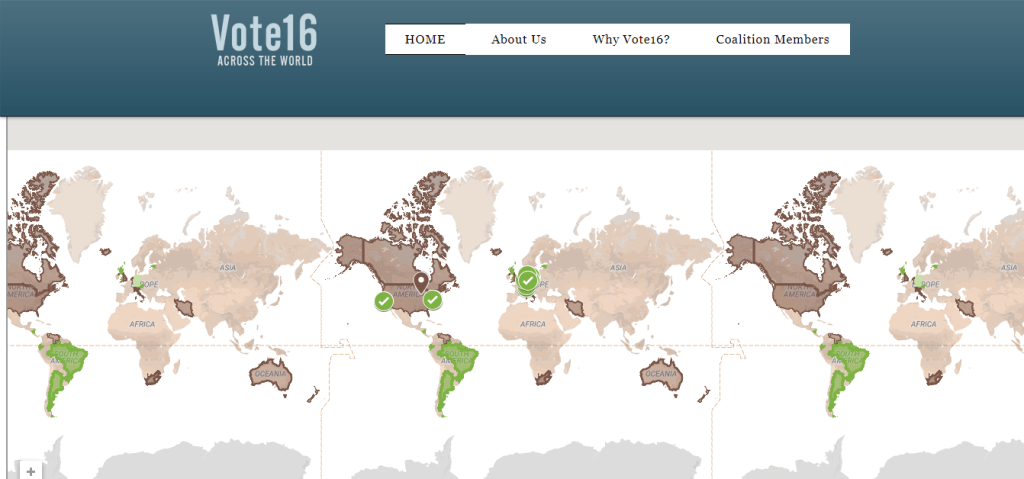
The webpage for the Vote16 World movement. It’s still a work in progress, but the coalition is progressing on many efforts around the world to enfranchise more youth.

This month, the movement to lower the voting age has gone global! Several youth organizations from around the world have begun organizing to lower the voting age in their respective regions.

Places where active campaign are currently taking place, including the U.S., Canada and others have joined forces with both places that have gained some rights for youth like the U.K. as well as new allies in New Zealand to work together to give each other support.

Although the joint alliance is new, the efforts by many members isn’t. In fact, now would be a great time to work together to address global issues that affect many young people around the world, such as the ongoing COVID-19 pandemic as well as the continue threat of climate change. Not only can youth now work together across the globe to begin addressing issues relevant to them, but they can also start trying to address issues relevant to their own regions that their peers may not be affected by.

Our years of tireless, persistent efforts have finally started to pay off. Now, we not only have a very real chance of spreading democracy around the world, but we can also make real change happen that a newer generation of young people can be a part of, something that many youth organizations have been trying to achieve recently. Now that a global website is up and running, we have an online resource to organize around.

No matter where you’re located in the world, we have ways of now joining together with other global movements to lower the voting age to 16, and we now have the allies, means and opportunity to do just this.

Jеstеr Jеrsеy

DavisKiwanian@mail.com

No Taxation without Representation: Time to Mobilize!

As the globe just marked the second year we have been affected by the pandemic, entering into our third as of last month, youth continue to be affected by ageist policies. The world continues to contend with the pandemic in some parts, while in many places youth still contribute to local economies, even during the pandemic, without being able to vote. Sadly, this continues even in the United States. Yesterday, April 15th, was Income Tax Day. Despite many young people working even in this pandemic environment, paying taxes locally on the wages they have earned, they have yet to get a vote. House Joint Resolution 23 can change this.

Right now, there are many organizations in the United States trying to address this issue. Some have been working only recently, in the last few years, while others have been around for decades. Others have been working locally, often at a local municipality capacity, while others also work nationally, sometimes on a regional basis. In some cases, we even have international allies we work with who are supportive of our efforts. However, it has only been in the last year that efforts to organize all these efforts to work together to collaborate on House Joint Resolution 23.

House Joint Resolution 23 still awaits a vote in the House of Representatives, while many groups working to collaborate on the issue await the time to take an active approach. I continue to monitor the progress often and keep our network of allies up to date on any developments. Whether or not this bill passes will depend on whether all supporters of lowering the voting age to 16 in the United States work together or not. In the case of the former, we just might have a chance at changing democracy for the better, like so many other nations that have already enfranchised youth. In the case of the latter, youth making contributions now, including areas hit hard by the pandemic, or where youth-specific issues are most prevalent, will continue to go without a vote for years, when these issues may not be as relevant but still affecting their younger peers. These issues will always affect someone, and right now, we have the tools, resources and allies to remedy this for youth in the short term while also making democracy better in the long term.

I would like to keep in touch with others if you’re not already in touch. House Joint Resolution 23 is an important piece of legislation that could help our efforts locally, regionally and nationally, at a time when youth are also affected by the pandemic, contributing towards those efforts while also still trying to address issues of ageism, like taxation without representation, climate change, school safety issues as some regions return to an in-person school environment and many other issues that supporters of lowering the voting age have been supporting since calls began to support expanding democracy to unenfranchised youth.

We have an opportunity to change the political landscape. Just like how we are obligated to do what we can to participate in our democracy, we should also do what we can to make voting easier, more accessible to our future leaders.

As House Joint Resolution 23 awaits a vote, we need to continually strategize effectively until we can get the bill passed when it does come up for a vote. For this reason, I and other allies will be reaching out to both groups and individuals, no matter how what efforts you’re working on or how large your groups are. Any help makes a difference. No movement is too small to make a difference in this effort.

If one person can make a difference, then we can achieve greater success on this issue if we work together. It is important that we share our resources and skills to work together to get this bill passed. Please get in touch with me if you we’re not already in communication with each other. We cannot let this important opportunity slip by!

Jеstеr Jеrsеy

DavisKiwanian@mail.com

Unexpected First Responders

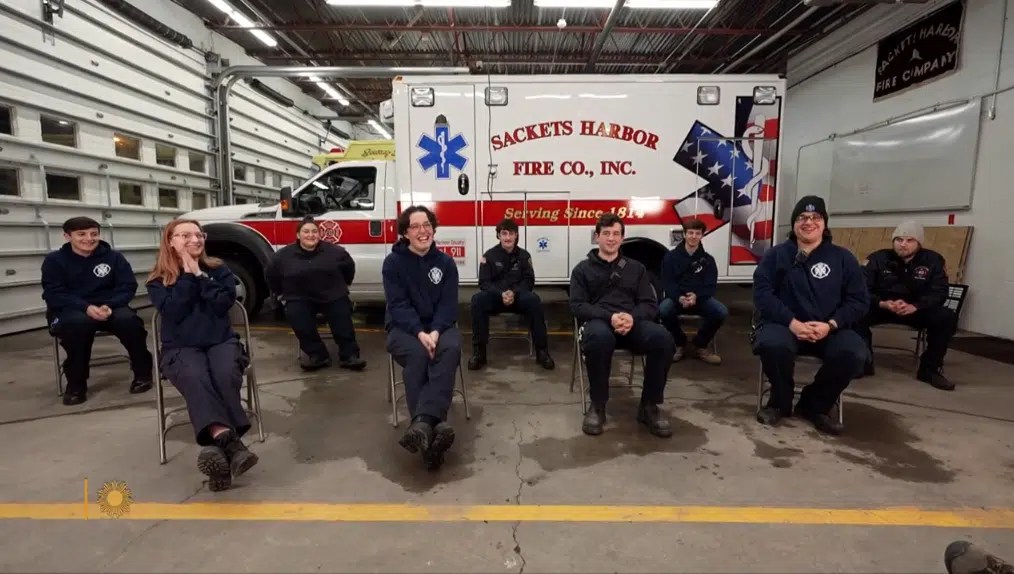
The COVID-19 pandemic has left a shortage of many things, including medical supplies, volunteers & even emergency medical technicians. Some high school youth have picked up the slack to help their communities.(Photo courtesy of Jane Kenney)

During the last two years, shortages abound during the difficult time. As hospitals filled up while store shelves became empty, another pandemic shortage occurred in the emergency medical technicians field, otherwise known as EMTs. However, one New York Community found an interesting, innovative solution to address the first responder shortage.

High schoolers in Sackets Harbor have recently volunteered to take up ambulance services at a time when cities attempted to mandate vaccinations. When the regular volunteers were unable to carry out their duties, Sackets Harbor youth stepped in to fill the role.

Grayden Brunet, now 20, first joined when he was 16, saying “My whole time being an officer here has been COVID (laughter). So it’s definitely been a learning experience… We came in one day and realized we were the only ones coming in”, referring to a time when vaccine mandates forced them to be the only responding staff as some of their colleagues protested the mandates.

Like in last month’s post about youth stepping up to get vaccinated, youth have also been active contributors to the pandemic, both stopping the spread of & helping people affected by the virus. Not to mention that EMT services also help non-COVID patients get the emergency services they need.

When asked about what it’s been like being a young EMT in light of COVID, Brunet says ” it’s definitely been a learning experience”. It’s probably a lesson many youth are learning as the pandemic has shown they’re often more autonomous than they give themselves credit for.

If you can trust youth who don’t have a vote to save your life in an emergency situation, you can trust them to choose the next leader of a democracy.

Jеstеr Jеrsеy

DavisKiwanian@mail.com

Vaccines & Voting

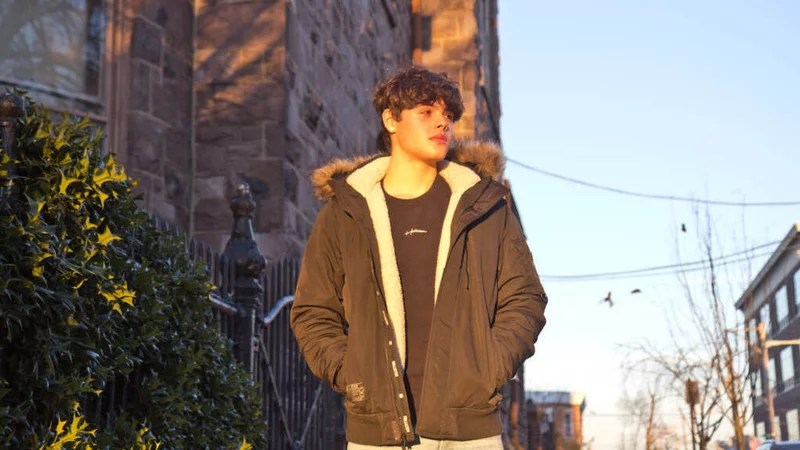
Nicolas Montero, who is the focus of today’s post. Montero, 16 recently received a vaccine without his parent’s approval, is an example of why youth should have a vote. (Photo by Kimberly Paynter/WHYY)

As COVID enters its third pandemic year, we take a look at how the multi-year event has impacted some youth. One of particular focus today comes from NPR News of a 16-year old who had to hide his plans to get vaccinated from his anti-vax parents.

Nicolas Montero, a 16-year old who resides in Bucks County, Pennsylvania, was recently vaccinated against his parent’s wishes, and needed to hide his attempt to get the vaccine. Before Montero could get a COVID vaccine, he had to travel to Philadelphia to do so. Fortunately, Montero had the means to get vaccinated. Other youth in his situation don’t always have the accessibility, and depending on where they lived, their local legislature may or may not be anymore helpful than trying to get one through their parents.

As a volunteer researcher with several organizations fighting COVID-19, this story resonates well with me for the argument of lowering the voting age, especially in light of the COVID-19 pandemic. There are several points worth mentioning in this article that support an idea of a lower voting age, especially to 16- Montero himself was 16; he was employed, and therefore paying taxes on the income he earned; and even a city regulation permitted him to get vaccinated.

Montero took his own initiative to get the vaccine, against his parent’s wishes, because opportunities existed and he wanted to do what he believed was the right thing, to not only protect himself and his immediate family but to also help protect those in his community as well as help end the pandemic.

Montero’s case shows how much of a double standard many youth still live through, even while going through a pandemic like the rest of the voting populace. At 16, Montero, like many of his peers nationwide, are: eligible to get vaccinated, can consent to getting vaccinated, are eligible to work, pay taxes and are just affected by the pandemic as everyone else. Yet despite being able to get vaccinated, traveling some distance from his home, he still doesn’t have a vote. In other words, you can consent to something that could have life-saving consequences for your own health, which can have immediate consequences for you and those around you, but you cannot vote on other issues that might affect you for longer periods of time, like climate change, gun control and where your taxes are going to. This is not right.

I urge all supporters of lowering the voting age to support H J Res 23. While it might not enfranchise all youths, it can enfranchise a substantial number of our future democratically-participating peers to make their own decisions that affect their health and other issues.

Jеstеr Jеrsеy

DavisKiwanian@mail.com

Remembering Dr. Martin Luther King & Continuing the Fight for Equality

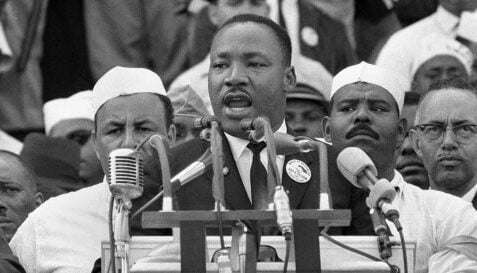
Dr. King delivering his famous “I Have A Dream” speech in 1963. Much has changed to improve the lives of minorities since then, but oppression continues in new ways and new forms, bringing challenges that both this generation and the next must face. It is up to us as supporters of enfranchising the next generation of leaders to continue the fight. (Photo courtesy of Encyclopedia Britannica)

Today is Martin Luther King Jr. Day. It has almost been six decades since Dr. King gave his speech in Washington D.C. on that warm summer day in August of 1963. One would think that since then, we would have more equality for people, be better off as a society & have less problems. That is unfortunately not the case.

Threats unimaginable in Dr. King’s era, such as climate, disenfranchisement & a global pandemic are only a few examples of issues that people are trying to address in light of inequality. However, addressing disenfranchisement is one way to address many other challenges- by giving the vote to the youth.

It is hard to know what Dr. King would think if he were still alive in this modern era. Perhaps he would be proud of the changes for the better to improve the lives of people since his speech. But I would also think that he would be disappointed in the lack of changes he has not seen. I think disenfranchisement of youth would be one of them. If it were not for that opportunity to deliver the speech that he is known for, many would not know Dr. King’s name. It would be likely that Dr. King would also want to hear the voices of future leaders to weigh in on the issues that not only affect them today, but issues that will affect them tomorrow.

There are many issues that affect youth. By trying to address them individually, change will occur slowly while other issues concurrently affect them. However, enfranchising them by giving them a vote will not only empower young people politically, but also let them have their voices heard on a wide range of issues, that affect them, their family and their community.

Building A #16ToVote Joint Coalition & A Website

(Above) Building blocks. It may look silly, but it’s a fundamental practice for any effort- all activities have to start from somewhere. Each piece may not be impressive on their own, but when enough of them are used together, you can build some impressive things. The groups that support lowering the voting age are a lot like those building blocks. We can do amazing things at this time- that’s if we work together to do them.

On the first 16th of 2022 & the day before Martin Luther King Jr. Day, I’d like to talk about two important topics connected to lowering the voting age to 16: a coalition around those efforts & a website. Both are equally important & should be made aware to all supporters, no matter where you are located, what efforts you’re involved in & what organization(s) you work with. Important moves are being made, so important resources should also be accessible to all supporters.

The first is the coalition of supporters. Since the announcement of Rep. Grace Meng’s sponsored HJ Res 23 bill, numerous organizations, both local within the United States as well as efforts around the world, have been discussing the possibility of working on a global joint effort to work together to support lowering the voting age to 16, much like recent climate change efforts have done.

What one gains in successes in one location can inspire efforts in another. As more places around the world continue to discuss the idea of lowering the voting age, recent successes in Wales, Scotland and others have also inspired their counterparts around the world. The next place that could potentially lower the voting age to 16 is the United States.

At this time, we’re close to the anniversary of the announcement for HJ Res 23, which was declared by Rep. Grace Meng in early February of 2021. The bill has had backing from several groups already working on efforts to lower the voting age to 16. As a fellow supporter, I have been in talks with many organization on building a coalition of sorts, made up of both fellow Americans but also contacts in Canada, Europe & the Oceania region(New Zealand, Australia). Our goal is to work together to support each other’s efforts.

Even though we may be dealing with different legislatures and methods to lower the voting age, the common goal we share is to lower the voting age. Most are looking at legislation, while others are connecting with officials to get more legislation to address the issue, while others are also campaigning and working in the background. I am doing many of the above, but I need your help, & so do other allies.

One of those ways is to get in touch with me. My email is always listed in the closing of these blog posts. If your organization, or even if you’re just an individuals who supports a lower voting age, it is important that we cannot. None of us on our own can make this happen. It is especially important in light of H J Res 23 that those in the U.S. in particular work together jointly. This could be one of the biggest opportunities we’ve had in years to enfranchise & empower more youths.

We are currently meeting online through an invitation-only platform, where several supporters have been meeting for some time, waiting to hear updates on H J Res 23. We are always accepting of new members, so if you’re not already on the platform, please contact me for an invite.

The second thing I want to mention is the website currently being worked on for public access. It provides ways to bring awareness to our work so that others who might not be as involved can still find informative resources about the effort and can share with their networks. We’re hoping it will be ready by the end of the month, and can also use your input and skills to help develop it. You can preview some of what is up on our website at this time here.

These extraordinary times call for extraordinary collaboration, from extraordinary individuals working to give ordinary individuals an opportunity to make their voices heard. We should use this time and take advantage of the opportunity to enfranchise younger voters so their voices can be heard on issues that affect them here & now. If we don’t, then it will be hard to tell when the next opportunity will come by again.

Jеstеr Jеrsеy

DavisKiwanian@mail.com

New Year, Same Disenfranchisement Issues(Unless You Let It)

Students walk out of classes amidst the COVID-19 pandemic. They’re protesting in-person learning at this time. Many teachers also happen to agree. (photo source: Vice.com)

Happy New Year to all! I wish I could provide these salutations at a better time, but work needs to be done and we’re the ones who can make that happen.

Obviously disenfranchisement of youth is still an issue, but so is COVID-19. One may think that the two issues never overlap. But because of how ageist governments are sometimes set up, apparently even the experiences, hope and fears of the next generation of leaders is nothing but a drop in the bucket among many, even though youth are just as exposed to the dangers of the Coronavirus as their older counterparts.

With the new year, many schools have started up again. Although at the time of this writing may be a three-day weekend for many in the United States, the last few weeks have been challenging- students and teachers have needed to make a return to the classroom with another guest- the COVID-19 virus.

The disconnect has been so prevalent with regards to safety that a new phenomena has emerged from the COVID-19 pandemic- students walking out.

Not only have gaps between the rich and poor become more noticeable during the pandemic, but that of the young and old- schools run by older individuals trying to get younger individuals to attend school. In some cases, even teachers have sided with students regarding the safety and rationale for in-person learning when the COVID-19 pandemic continues on.

However, unlike their older allies that can form a teacher’s union, there’s very little power for students on their own, and are dependent on the help of endorsements of the latter group to make any noticeable difference. The balance of power could be shifted if school boards lowered their voting ages. Even more so if it were municipal wide, as several school could fit into one district, much like it is in Chicago where much of the educational unrest has centered on.

One could argue how could voting on school boards by students have helped? Grievances could have been heard louder, and ways to determine if in-person learning would have been sensible. However, when the voices of students are not taken into account, there is proportionate inequality. Students are not only risking their health to go to class, but those of their family members. Even with vaccines are available, people can still remain at high risk for transmitting COVID. If students were given more of a voice, perhaps in-person learning could have been delayed, rather than students depending on a teachers union to express their thoughts on their behalf. If students are at equal risk of getting COVID as their teacher allies, they should also have a say just as much as those in a teachers union, as both groups are in a classroom setting.

Students who are walking out of in-person learning with regards to unsafe learning conditions should get the full support of everyone, and we as supporters of expanding enfranchisement should encourage these moves until we can get them the vote on school boards and cities so they can make their own voices heard.

Jеstеr Jеrsеy

DavisKiwanian@mail.com

Worldwide Collaboration on #16ToVote

Numerous movements to lower the voting age to 16 have emerged around the world in this year alone. Many efforts to lowering the voting age are also ongoing.

Recently, several places around the world have been considering lowering the voting age to 16. The United States has had numerous groups working on the issue for years now and have even gained some victories through local efforts in Maryland. However, recent international successes in Scotland and Wales in 2014 and 2018, respectively, have widened that scope to connect allies from around the world together in an effort to enfranchise future leaders of tomorrow.

A number of recent meetings among groups from around the world working to lower the voting age, those who are interested in lowering the voting age and have expressed interest in doing so and those that have even lowered the voting age to 16 already, has sparked interested in a worldwide collaborative to join together to do just that.

Recent activism in Canada by disenfranchised youth, supporters in Spain and even Germany’s new incoming government have put lowering the voting age on the international spotlight. This doesn’t include the work already going on in the United States, New Zealand, Australia and many other places where movements to lower national voting ages are already occurring. The potential for collaboration worldwide continues to grow, and with international issues such as climate change, global warming and threats to democracy in the form of limiting voting rights, now is the time to act and enfranchise the youth of democratic nations.

In my previous blog post above, there has been quite an amount of interest in the efforts in the U.S. alone, but there is also potential for that interest to be generated worldwide and to collaborate with those working on international efforts.

If enough individuals, groups, organizations and even supportive politicians work together internationally by sharing strategies & resources, we may be able to lower the voting age where many of these efforts are taking place.

Jеstеr Jеrsеy

DavisKiwanian@mail.com

Collaboration on #16ToVote Project: House Joint Resolution 23

A circle of hands joined together. We need to do the same thing for H J Res 23. & the time to do that might just be now and we need to act on it.

I normally don’t write blog posts outside of the 16th each month, let alone post them days in advance. However, recent developments have warranted the need to do so. I will try my best to provide those reasons in the following few paragraphs. Most of these will center around House Joint Resolution 23(H J Res 23), the national bill by Grace Meng to lower the voting age to 16, but this can also help local efforts too. I will start from least important to the most pressing reason why we should collaborate on a strategic plan on how to tackle enfranchising youth. If you’re in any sort of youth political rights group, regardless of your organization’s strategy regarding expanding enfranchisement, then it is important that you not only read the following paragraphs but also share it with those in your network as well. Otherwise, all our efforts, individually or jointly, will be for nothing in regards to the national conversation on lowering the voting age.

I attended a recent webinar that was hosted by the Atlantic Council regarding democratic alliances worldwide as a response to the emergence of more authoritarian ways of governing that have recently surfaced in the last few years, threatening the spread of democracy. The webinar was mostly moderated by Ryan Heath, a Senior Editor of Politico. After the event, I wrote a Twitter thread post regarding the webinar that I was hoping might bring attention to lowering the voting age in general as well as H J Res 23. The thread was later RTd by Heath, where I suggested that as democracies around the world mobilize to combat more authoritarian modes of governance, democracies should also consider lowering the voting age to 16 if they have not already done so. My post was not only RTd by a Political Senior Editor of one of the largest political news media source outlets of the world, but I was also given a follow. Shortly after, I contacted the media outlet to speak with Heath about possibly using this interest to look at H J Res 23 as well as doing something similar for democracies around the world. I have been forwarded to a journalist who specializes in the area of voting rights and awaiting a response at this time.

The significance of this is that Politico has previously done stories about lowering the voting age before, so I know interest would be high if we can mobilize a concerted efforts among groups throughout the United States who are interested in working together on H J Res 23. As I mentioned in previous blog posts, I think this is possible. I know it is possible. I think Politico would be even more interested if we can conduct a multi-organization effort that demonstrates how serious we are, especially if that focus is nationally. We might even be able to lower the voting age to 16 nationally for certain this time- if we can successfully develop a plan to work together through H J Res 23. With the ear of Politico, we might also be able to garner attention to this nationwide. For that, I could use your help of any and all supporters in this field.

The second thing is House Joint Resolution 23 itself. As the bill is billed, to pardon the pun, as a piece of legislation for the 117th Congress in the 2021-2022 term, and given that the holiday season is coming up, it is unlikely it will come up for a vote this year. When it was introduced in early February of this year, we had two full years to consider for when it would be heard- it could have been discussed this summer, last month, sometime next year, etc.. With the pandemic mostly delaying passage of many bills & 2021 being nearly over, with the winter recess approaching, we can safely assume that if it is heard, then it will likely be sometime next year, before the elections to determine the political makeup of the subsequent two year Congress. This means that H J Res 23 will likely be heard sometime in the next year, but not in 2023. I don’t know what procedures exist to extend that if it isn’t, but I’m preparing as though it will be up for discussion in 2022. For us, if there’s to be any sort of collaborative action on our part, it would also have to be around the time the bill is being considered. Collaboration could come in the form of phone banking, social media Tweetstorming, contacting local representatives, traditional media like political magazines, other media outlets, etc. Basically, any action that increases the chance of passing the bill, bringing awareness of it and letting people like its sponsors know we support them and want it to pass.

The most significant part of the things dealing with H J Res 23 is that this delay has both pros and cons. Pros are is we’ve narrowed down the discussion expectancy to within a year instead of two(2022). This also gives us an advantage regarding the waiting period, focusing on a shorter time frame than needing to stay vigilant for two years. The disadvantage is that assuming things progress where bills start getting discussed again, it will likely be a dash for all other bills that were delayed. This means we would have to make more noise to garner attention for other competing bills. Obviously, getting in touch with Politico could give us a big advantage. Reaching out to additional media outlets also helps, so not only having a robust social media team to bring awareness to the bill is needed, but also social media savvy individuals who can do this. If there’s some sort of concerted collaborative effort among organizations based in the U.S., then we can tip the scale towards the pros of the delay by using the time to plan and effectively strategize until the bill is heard.

Lastly, this might not be a conclusive gamechanger in the efforts, but it is definitely a concern that would need careful consideration. This has to do with our current Speaker of the House, Nancy Pelosi. This may be the most important facet of my plan, so I’ve broken it down into two parts.

1.) Although I did not devote a whole post to this previously because of the unpredictable nature of politics, I did touch on this in one of my blog posts from last year- this may possibly by Nancy Pelosi’s final term as the Speaker of the House. Much of the information I’ve heard of regarding this development is obviously speculation, as she might not be on her last term. Even she is reluctant to specify what her plans are, as she hasn’t concretely said she will not run. Although she has no involvement with the crafting of the H J Res 23 bill, she is the highest political office holder known to date who supports lowering the voting age to 16. She has done it on two occasions, once in 2015 and again in 2019. It’s all in the blog post I mentioned above. Obviously, with a bill like HJ Res 23, the groundwork I’ve laid in building connections with diverse groups during the past year and Speaker Pelosi’s supposed impending retirement next, this is one opportunity we cannot afford to let slip.

2.) This may be the most important part of the two-part plan regarding Pelosi- Also part of this plan is that we may have contacts to the Office of Speaker Nancy Pelosi herself thanks to my efforts and connections. Actual contact info! However, I don’t think any politician’s emails should be thrown about loosely on the internet superhighway lest the Speaker opt for a new one, requiring we find another means to get that one. Much less perhaps one of the most supporters of lowering the voting age. This would require just as much strategic planning, if not more, than even the awareness campaign itself for H J Res 23. I can pass on what I have in this regard, but I would like to pass this sensitive info only to the most trusted in my circle and highest of leadership among the most committed. I would also like to strategize about the merits of whether we should contact her all individually, regardless of organization affiliation, each individual organization, all together as a multi-organizational group(several groups signing on to just one letter) or a combination of these. Each individual option by itself has its pros and cons, so that is what I would like to discuss with groups who are willing to speak with me regarding Pelosi’s contact info. Obviously, flooding her inbox with random messages without any sort of cohesion or collaboration would be no more different than someone spamming someone’s inbox with junk mail, so if something is sent, it should be the highest caliber communication that we can send to the third highest office holder in the land.

I’ve laid out an argument above for the means of mass awareness for the cause (Politico), the need to focus our efforts on the means to get us the results of lowering the voting age(in the U.S., through H J Res 23) and possibly getting in touch, maybe even the endorsement of the highest official in the land to support it and bring it back into public dialogue(Speaker Pelosi through my contacts).

While I’ve laid as much groundwork for this as possible as an individual, I am not in it for the credit, as I understand I am not the only contributor to this effort- plenty of individuals I’ve met, several organizations and even many politicians also support the idea of a lowered voting age. I want any success on the outcome of this effort to be shared, not hogged. I’m always available for discussion on anything mentioned here or on previous blogs, so let’s talk so others can have their voices heard as well.

Jеstеr Jеrsеy

DavisKiwanian@mail.com

Design a site like this with WordPress.com
Get started