We Conquered in Boston!!
I just wanted to send a special thanks to my team at Tufts University yesterday to help with the Frontiers of Democracy discussion panel to lower the voting age to 16. I think we all did a great job, brought more awareness to an important topic & had a great time while doing it. Big thanks to all the people on the team who helped out!
We’re Going to Boston!
To Boston & Beyond!
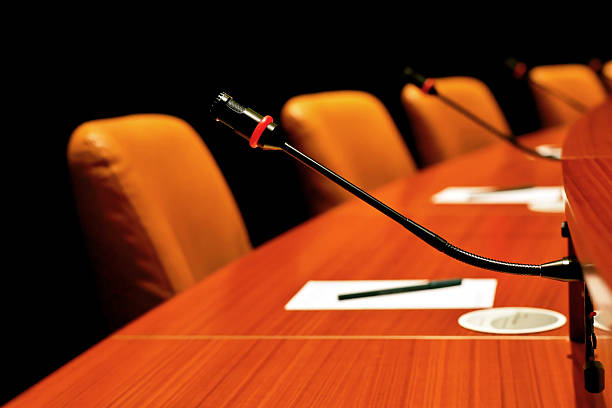
An empty conference panel. I’ll most likely be a participant in an upcoming panel later this summer to talk about lowering the voting age to 16.
This is pretty much a continuation of last month’s post, but with a twist. Rather than a call for panelists or a story about lowering the voting age, I wanted to talk about efforts by a local pioneering who was native to Boston to bring about change.
In the late 19th century, the world wasn’t a friendly place for women’s suffrage. It wouldn’t be until almost half a century later before women even got the right to vote in the United States. However, women suffragists did many things to change this, often voicing their opinion in the form of protests during the day. One such woman, Annie Londonderry, literally took her message around the world to bring about change & better attention to the plight of fellow women suffragists.
You can read more about Londonderry here, but the short story of it is, Londonderry had traveled around the world to advocate for greater rights for women. Women had very few rights compared to men in those days, despite the only reason preventing them from social mobilization was because society saw them as the wrong gender. Londonderry disagreed with this injustice and sought about for a way to change the world for the better.
Mrs. Londonderry began her global trip in late June of 1894, spending the next 15 months traveling around the world by bicycle to advocate for women’s suffrage. By late summer of 1895, the Boston native had made it back to her home city, bringing much attention to the plight of fellow suffragists of her time. In fact, her contribution was so notable that fellow famed women’s suffragist, Susan B. Anthony, weighed in on Mrs. Londonderry’s trek, which would not have been possible without the help of the bicycle: “Let me tell you what I think of bicycling. I think it has done more to emancipate women than anything else in the world“.
In 2015, I walked across the United States to bring attention to lowering the voting age to 16. Although my efforts might seem miniscule compared to what Londonderry had done more than a century prior, we share many commonalities. Like Londonderry, I believe it is the next frontier of suffrage in this modern world. It already exists in many places around the globe- you can find them online or read some of the numerous blog posts I’ve been writing over the years. We even have some cities in the United States that have already lowered the voting age. Like Londonderry, we both saw an injustice that we both wanted to solve, and actually did something about it. Finally, like Londonderry, we were both faced with insurmountable odds, yet continued to persevere.
However, unlike in Londonderry’s time, women had very few tools to fight with to enable women’s suffrage. Women were barred from voting, much less hold office, men were prioritized when talking to the public media and there were no social media platforms that existed. Even if such things were around at the time, men would have likely tried to also bar women from accessing it as a soapbox to air their grievances. Right now, we have House Joint Resolution 16, and now, a great opportunity to actually lower the voting age to 16 like the numerous places around the world that have already done so. Nothing is impossible if we work together, and the Frontiers of Democracy Conference is our shot to bring the issue of lowering the voting age to the forefront of mainstream media.
We might be able to lower the voting age now, we might not. We won’t know though until we try. While we’re in the midst of the basketball playoff season &,just finished March Madness & the emergency that the pandemic brought to the world, a quote often sticks out to me- “You miss 100% of the shots you don’t take”. I would rather take a shot at doing something & failing it, then to not have taken the shot & wondering with regret if I could have made a difference. It might be a long shot, but a chance is a chance, so we must take the opportunities we have before us & not waste them.
But like Londonderry in 1894, she had a dream that someday in the future, a woman’s voice would be equally valued as a man’s voice whether it be an opinion, a preference or any other statement that a woman weighed in on. Eventually, her dream became true. Her dream didn’t stay a dream- it became a reality. Like Londonderry, I too believe that we’re not too far from the edges of democracy, where we can bring in those at the edges of the frontier that have been too long excluded from the voting booth. Like Londonderry, I’m not just a dreamer, I’m a reality-maker. You too can make the dream of lowering the voting age to 16 a reality. We have that opportunity now.
Please support me & my allies working with me on lowering the voting age to16!
Jester Jersey
Increasing Enfranchisement Awareness Through Presentation: Calls for Collaboration!
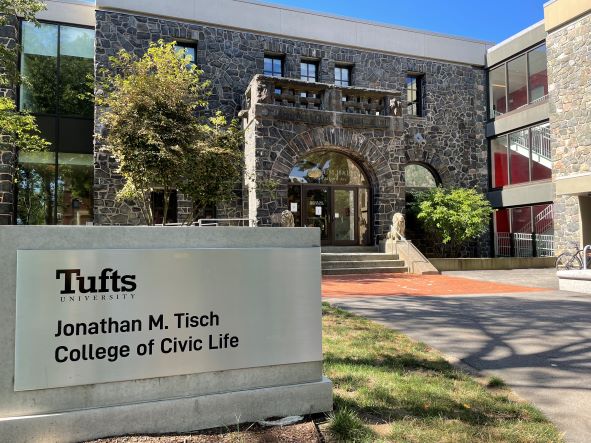
Barnum Hall outside of the Jonathan M. Tisch College of Civic Life. The private research institution, Tufts University, is looking for proposals on an upcoming conference for July.
Usually, I would post a monthly blog feature that is somehow connected with lowering the voting age. However, given that it is the annual no taxation without representation edition of the blog, Tax Day & an open possibility to collaborate with members of various networks supporting lowering the voting age, I’m going to make an exception this time.
So there’s an open call for presenters this summer for an event in Boston where those with new ideas can present and where I will be traveling to this summer as part of my travel tour of the U.S. to promote House Joint Resolution 23. The Frontiers of Democracy Conference will take place in July, however ideas are being accepted to provide a presentation during the conference. I am interested in forming a discussion panel with members of the Colloquium, but also allies of the Colloquium like youth organizations, climate activists and other youth suffragists, many of whom I already am in contact with. The deadline to submit an idea is on May 1st.
The conference would be one of many important events I will be going to during the course of the summer, but possibly, one of the most important in terms of being able to collaborate on a joint effort with members of the Colloquium and other youth rights supporters.
Because of this, I would like to make an open call to members of the Colloquium who would like to participate on a panel to talk about House Joint Resolution 23. Unlike most events I will be involved in this summer, the advantage of this option is that even international members of the Colloquium can participate, as not all panelists need to be present- there is an option for co-panelists to present remotely. As long as one main organizer is present, all other panelists can participate no matter where in the world they are located, much like we already do t our regular Colloquium webinars. The panel can go up tp 90 minutes, so there is ample time for numerous organizations who support some form of expanding enfranchisement to provide information on their personal work, regardless where you’re located in the world. Rather than discussing the various degrees of enfranchisement amongst ourselves, we have an opportunity to all participate, though I would be willing to be one or more of the representatives to physically go there to present if our proposal idea is selected.
There are some limits & rules to submitting entries, however. I spoke with organizers of the event this past week, and they clarified that while a person can submit multiple entries if each entry is different from each other, i.e. I will talk about lowering the voting age to 16 in one entry, another entry will discuss climate change, and another entry will talk about the efforts of fellow Colloquium members to expand voting rights, I cannot submit an entry to form a Colloquium panel, then have several of us do the same thing to increase the chances of being picked. We can all submit ideas, but they have to be unique and original.
You can submit an entry where, as an example, a Colloquium member might want to form a panel and ask me to talk about my contributions towards youth suffrage. I could be a contributor to a climate panel, a civic panel, a proxy voting panel, etc., but each submission has to be unique, not copies of the same proposal with different people submitting the same idea, so if you’re versatile and can talk about many issues, you can contribute to any kind of panel, but you’ll likely only contribute to one panel on that day if one of our ideas is chosen. Although the panel would be suffrage in general, I could still contribute to other panels because lowering the voting age counts as expanding suffrage. Whether your idea is chosen or mine, the main theme of the conference is democracy, so if a panel is convened, it has align with that theme.
I think that if there is an idea among members of the Colloquium to do a Colloquium-focused event, I would be willing to be a panelist for that idea, but I think that someone else should form a separate entry for it because they would have the most experience for it. Because of my focus on my awareness efforts this summer, I would like to form a panel that looks at lowering the voting age to 16, particularly where House Joint Resolution 23 is concerned. I believe such a panel could benefit from us in a similar way that Next Up in Oregon did that incorporated a national panel of contributors two years ago today. However, the only difference this time is that the panel would be focused on the House Joint Resolution 23 bill and internationally, rather than nationally like the panel video shown above.
I would like to form a panel as diverse as possible, incorporating as many diverse organizations as possible that have been focused on lowering the voting age, and would be interested in working with around half a dozen individuals who would like to form a panel behind the idea of lowering the voting age and discussing the merits of it.
If you would like to get in touch with me to collaborate on the conference panel, please get in touch with me as soon as possible.
Jester
The Search for Greener Pastures: Traveling to Promote Lowering the Voting Age

This year marks many important milestones for many youth victories in the last decade. It can also be a year for additional gains for youth empowerment efforts.
In a few days, spring will begin for the year, with many locations opening up once more and slowly emerging from the cold winter months that have been marked by pandemic and precaution alike. Meanwhile, champions of youth rights are continuing their efforts to give young people a voice in the United States and internationally.
As youth victories are gradually accumulating around the world, there are also the ongoing efforts to enfranchise more youth voices, particularly in the United States. Last month saw the second anniversary of the introduction of House Joint Resolution 23, which has yet to see a formal vote on it. It has hardly any coverage either, and even among those within the youth empowerment network, some aren’t even aware of it.
Given the last several years of the pandemic environment the United States has experienced, including the recent tripledemic, one can understand the ordering of priorities, and how these events that caused global disruptions have made fighting for youth rights difficult. One can also see that youth have been involved in pivotal events during the pandemic as well, yet still often don’t have a vote nor a voice in their immediate sphere of influence around them, despite their efforts to contribute to the fight against the pandemic.
However, 2023 provides a new opportunity for youth voices to be heard; and that is through an upcoming summer project that I would like to collaborate on with any and all youth rights supporters that I wish to share with readers.
As many youth advocates know, I had walked across the United States in 2015. At the time, not only had I fundraised for UNICEF, but I also walked to bring awareness to lowering the voting age to 16. Although there was no national bill to lower the voting age to 16, there is one now. Also, since my walk was during the months of May to September of 2015, I possibly believe that may have gotten the attention of then Speaker Nancy Pelosi. Although Pelosi is no longer the Speaker of the House, she is still in the House of Representatives, meaning there is still some influence her voice can provide to the movement. Given that House Joint Resolution 23 has still not come up for a vote yet, I think now is a time to capitalize on that fact based on the recent gains around the world regarding youth rights.
However, unlike in 2015 when I traveled nationwide by foot, I would like to still travel the nation, but this time by train, to locations where I can speak at events that support youth enfranchisement efforts to bring greater awareness to local, regional efforts as well as the national bill itself.
Why is 2023 a great year to promote these efforts?
Last year saw great progress on youth rights, particularly in Germany and New Zealand. It has almost been a decade since the voting age was lowered in Scotland, with next year being the 10th anniversary. Finally, this year marks the 10th anniversary since the voting age was lowered to 16 in Takoma Park, Maryland. Since then, we’ve had other cities follow; but we need to enfranchise more young leaders.
Ongoing efforts in New Zealand demonstrates that we need to support international efforts because of the support we get from them- our collective efforts inspire each other to work hard to enfranchise more youth. Victories in Scotland, Takoma Park, and elsewhere show that it can happen when a concerted effort is put forth. Places that have already had a lowered voting age show that it is not impossible. We’re near that higher end of the tier- getting victories and working to expand more. We need to take advantage of that favorable climate.
At this time, lowering the voting age is not impossible- we already have plenty of examples that show that is not the case, and many more growing efforts that demonstrate that it is even less so. But we still lack a focus through national lens on that issue. I want to help bring it more to the forefront of mainstream media consciousness.
The world is slowly recovering from a global pandemic. There is much rebuilding that needs to happen. It also needs new voices and new leaders to make their voices heard. But if young people are not part of that rebuilding process, the post-pandemic world that emerges tomorrow will look like the pre-pandemic world yesterday- unenfranchised youth who still don’t have a voice, will likely contribute to the next pandemic in the same way they did with the last one, without being credited for their efforts or even acknowledged as being part of the solution. This year can make a difference on whether future leaders can be heard here and now, or if they have to wait years later when the issues they want to weigh in on have less relevance to them- again.
This summer, I want an opportunity to change all that. I want an opportunity to speak on behalf of those we are trying to get voices for. I want to ask for the help of all those reading to help connect me to events to speak at in the next few months. I would like to once again travel across the United States to speak on behalf of youth rights in order to enfranchise the next generation of leaders!
Jester Jersey
DavisKiwanian@mail.com
The Social Media Divide Provides An ‘Uncommon’ Common Ground
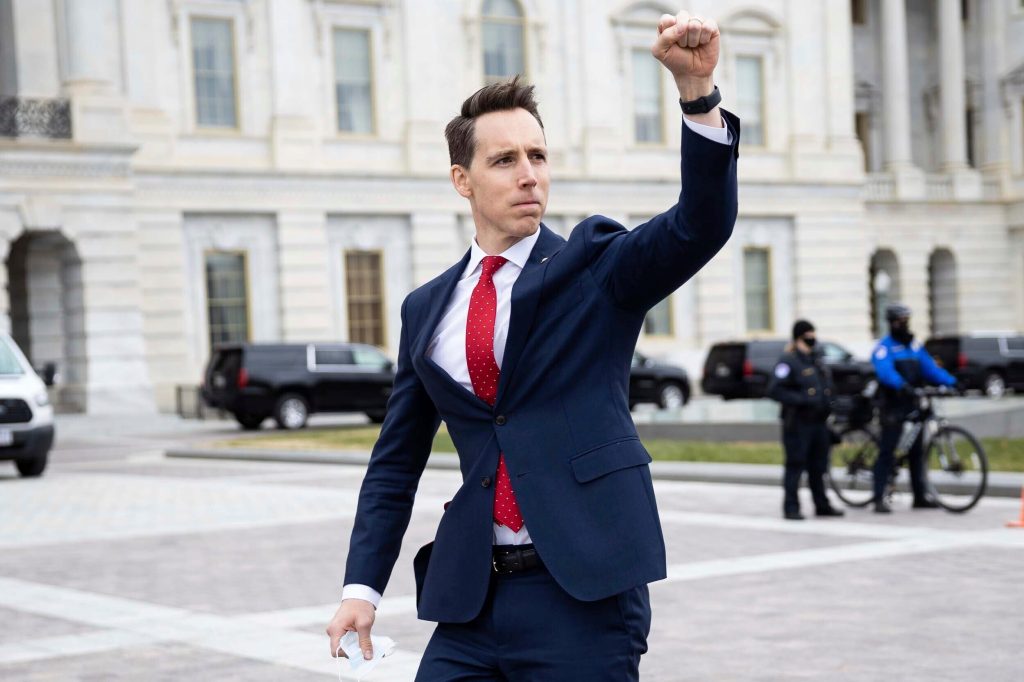
A famous photo of Sen. Josh Hawley of Missouri(R) throwing his fist up in the air. It was widely used during the Jan. 6 Investigation Committee in the last few years. Sen. Hawley has recently authored a bill that seeks to require social media users to be 16 years of age. (Photo courtesy of Vogue)
Social media saw a large amount of activity in the last three years as the pandemic kept many sheltered from socializing early on, only for people to retreat back to the digital world with the revolving seasons as the COVID pandemic reached apexes both during & after vaccines first became available.
For many, social media brought a virtual refuge that even COVID couldn’t touch the last few years, yet many knew full well that the pandemic itself was the reason it drove them to social media. No doubt social media has played an important role in how we communicate in modern times in both pre-pandemic as well as our current environment. In fact, it has become as pervasive in modern living like e-cigarettes- so much so that now government wants to regulate it.
Enter Republican Sen. Josh Hawley of Missouri. Sen. Hawley has recently introduced a bill to make it a requirement for social media users to be at minimum 16-years old. While many in either party, whether one leans left or right, or even if they lean moderately as an independent, might not make much of a fuss over this. However, supporters of lowering the voting age might find this useful, even if it doesn’t address the voting age at all.
For the party that has not been supportive of lowering the voting age, it is interesting to note that this legislation came from a Republican senator. In contrast to a bill that was introduced in the House of Representatives two years ago this month, House Joint Resolution 23, Democratic sponsor Grace Meng proposed lowering the national voting age to 16. So did 17 other co-sponsors of the bill.
Often, people see the right & left hardly ever agreeing on any partisan issue. Yet both parties see 16 as a line of demarcation of sorts, even if those reasons range from whether they should be allowed on social media or whether they should have a political voice in who represents them. We already have the latter in several cities in Maryland, so all the more reason to make it uniform across the United States. Even many countries that have had faced difficult opposition to the idea are slowly, or even rapidly, moving in that direction. Not to mention that it already exists in so many other countries even before many supportive organizations started working on the idea.
This post isn’t questioning whether there should be a set minimum age for social media- that can be sorted out in the digital sphere. Instead, this post looks at one of the uncommon common grounds that the left or right even have- setting a minimum age for anything, coming at a time when we have a divided Congress.
Now that we have something we an agree on, let’s get the voting age lowered.
Jester Jersey
DavisKiwanian@mail.com
Sixty Years Later: The Dream Still Lives; But The Work Continues
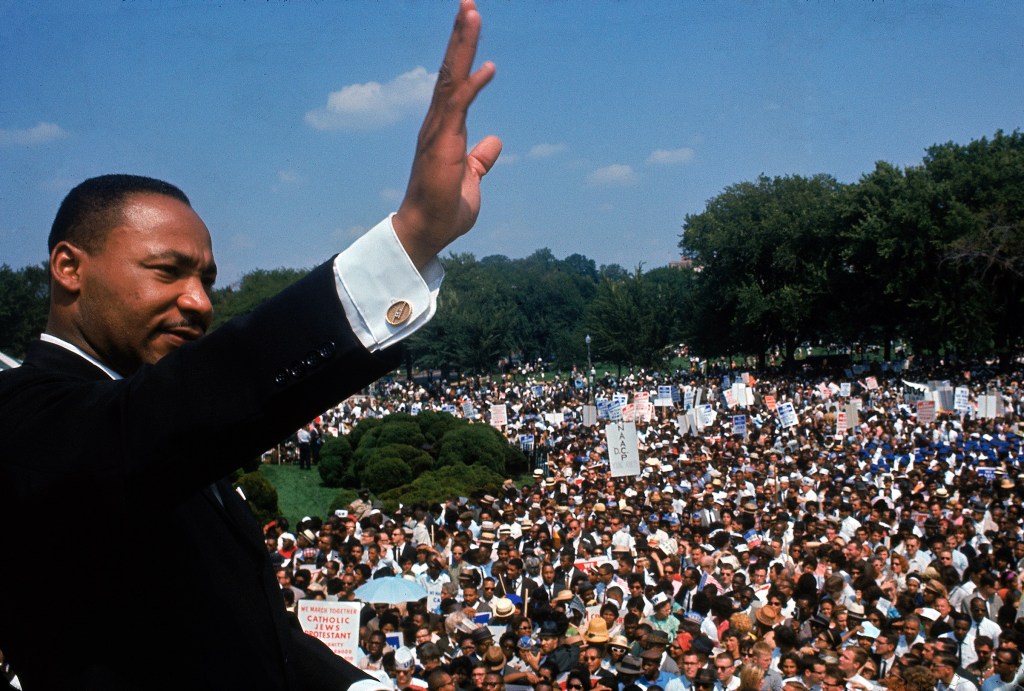
In late August of later this year, Martin Luther King Jr.’s “I Have A Dream” speech will mark its 60th anniversary. A photo of King at the national mall in Washington DC. (Photo provided by History)
This year’s Martin Luther King Jr. Day marks the eve of the 60th anniversary of his I Have A Dream speech later this summer. So, how have things changed since that warm summer day? In some ways, things have improved, while some things have yet to change, while still yet others make it seem like things have gone into full overdrive- but in reverse. Let’s take a look at what is what.
In the last 60 years, we’ve seen more inclusion in society, such as more representation of minority groups in media, from broadcast television, to shows on streaming providers, to larger events of historical significance, such as the election of the first African-American President of the United States, Barack Obama.
Granted, social change doesn’t occur overnight. Few things ever do. But one would hope as we have been progressing towards a more progressive society, one would think the backwards thinking of the days of Jim Crow would be far from the rearview mirror, right? Unfortunately, this doesn’t always seem to be the case.
While we’ve made great strides in inclusivity, we’ve also failed to make other progressive accomplishments, such as lowering the voting age when other efforts around the world have been making gains in those endeavors. Even for other rights, such as voting restoration for voters who’ve gained the right back after previously losing it or even basic abortion rights for young mothers, one has to wonder about the future progressive efforts, like addressing school violence & climate change concerns.
However, the more pressing & perhaps concerning are the more recent events involving racial inequality, such as the recent news stories about the need to remind society that Black Lives Matter, and the efforts involved in those events that have captured the headlines in recent memory.
African-American communities aren’t the only segments of society that are also affected by racism: Asian-Americans have also experienced their fair share of discrimination in recent years with respect to the COVID pandemic.
Recently, the Orange County Board of Supervisors declared racial inequalities that persist to be health crisis, demonstrating that many communities still have to grapple with challenges to address divides that affect contemporary individuals of modern society who hail from diverse backgrounds. These issues of race & intolerance continue against the backdrop of Martin Luther King’s Dream, showing that 60 years later, many of us may not have seen as much progress as we would like.
Clearly, there is much work to be done besides marking the three-score milestone speech from the one whose legacy we are observing this month and this very weekend in the United States going into the 60th year of making that Dream into a reality.
Martin Luther King provided a voice for the voiceless of his time, much like our efforts today are bringing voices to those who have none. We have to continue that legacy in our work as well, regardless of what particular segment of the human population we want to amplify. One of those main focuses should be enfranchising those who don’t already have a voice, so we don’t have to speak on their behalf, but can have a voice of their own to advocate for themselves.
Dreams don’t become realities unless dreamers put plans into action.
Jester Jersey
DavisKiwanian@mail.com
Changes Are A-Coming!
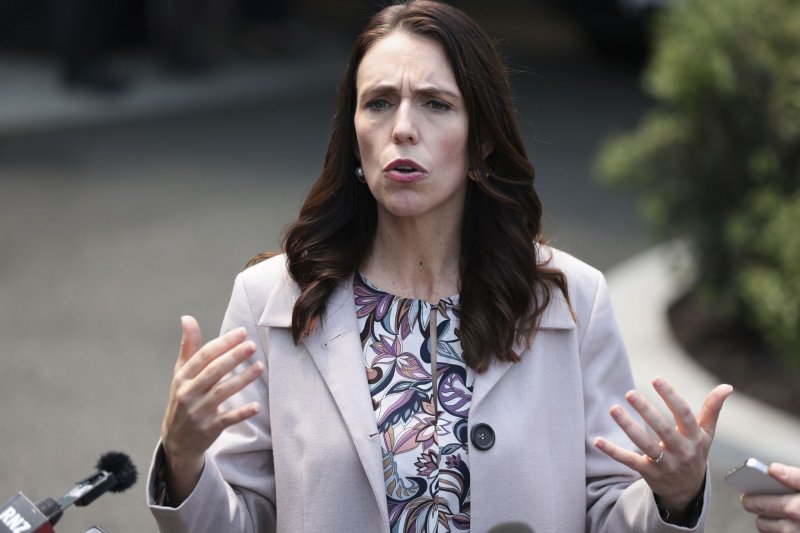
A photo of Jacinda Ardern, New Zealand’s Prime Minister. Like the outgoing U.S. Speaker of the House Nancy Pelosi, the prime minister supports lowering the voting age to 16. With current events playing out across the world with regards to lowering the voting age, the U.S. just might be next to make it happen! (photo courtesy of Oliver Contreras of UPI news)
As the United states closes out another year without a lowered federal voting age to 16, two global beacons of hope are keeping the torch lit as well as continuing to give momentum to the movement worldwide.
Terry Reintke, a Member of the European Parliament(MEP) and President of the Greens–European Free Alliance(Greens/EFA), announced the German Parliament’s move to lower the voting age for European elections to 16 early last month via Twitter. The move comes after several German political parties have supported the idea in recent years, which I’ve covered previously in a blog post from the summer.
The movement to lower the voting age as well as expand democratic voices isn’t only limited to Europe, but allies in Oceania, the area of New Zealand, Australia & Tasmania, are also making extraordinary gains as well.
The supreme court in New Zealand has recently made a supportive decision by ruling that its current minimum voting age discriminates against 16 year-olds. This landmark achievement would have only been possible thanks to the efforts of the Make it 16 Campaign of New Zealand, so if you’re part of the movement and reading this, this post is dedicated to your efforts. My and other allies’ hats are off to you for this!
For those of us in the U.S., but also active supporters in Europe, Oceania and everywhere else around the world, we have momentum going into 2023 to help our respective movements achieve more to help give a platform and amplify young voices. Keep up the pressure by recommitting your efforts to give those who don’t yet have a voice and continue to work together with allies no matter where we’re located. Together, we can achieve great things!
Jester Jersey
@16ToVoteProject
Chances
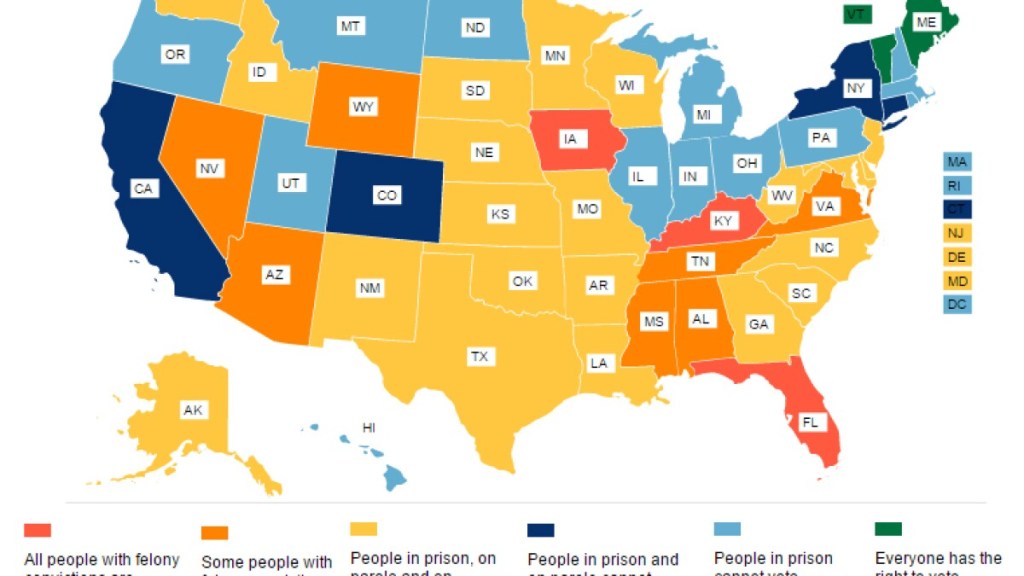
A map of places where felon who have been convicted can vote, depending on the state’s laws. Recent debate has been opened up once again on restoring the eligibility of voters who’ve been previously convicted of crimes. (Map courtesy of wuwf88.1)
The recent elections have once again touched on the subject of whether convicted felons should have their voting rights restored after they’ve served their time. Many people support giving offenders a second chance, particularly when issues affecting them after they’ve been released from prison will continue to do so after they’ve been released. However, recent elections have caused confusion on the topic. Depending on where one calls home, the level of voting restoration also differs, as some are able to vote as soon as they’re released while other states throw a bunch of hurdles that prevent those with prior convictions from participating their democratic right.
In the state of Florida for example, where the issue has been the focal point of recent debates, as Amendment Four, which looked to restore the voting rights of those previously convicted, has met with some confusion and obstacles by Florida voters.
While former Florida felons do get their vote restored, it is often after they have paid fines associated with their incarceration. In the event a felon has failed to completely pay their fine, they are sometimes charged with voter fraud, which has happened to several potential voters. The Real News editor-in-chief Maximillian Alvarez, who hosts a politically independent-oriented podcast, spoke to Florida State Representative Anna Eskamani about the confusion.
Mansa Musa, the podcast co-host, also contributed to the discussion, likening the idea of being incarcerated for voting because you were previously incarcerated, to the Jim Crow era, arguing that “in 2022, [we] find ourselves in this place of Georgia, Alabama, 1960 Ku Klux Klan, stalking the polls to have us in this state of mind where now we legislate this terror and lock people up, it’s beyond […] imagination”.
If being incarcerated is beyond one’s imagination, then imagine what it is like to be unable to vote, despite being expected to pay taxes, be able to drive vehicles on publicly supported roads and still not be able to have a say on issues that affect you and your peers. That is just as imaginative, and one’s only fault is just not being old enough.
Keep supporting lowering the voting age and common sense voting reforms in order to correct these injustices. Not only do felons deserve chances, but youth voters deserve to have their first chance to vote too.
Jester Jersey
DavisKiwanian@mail.com

