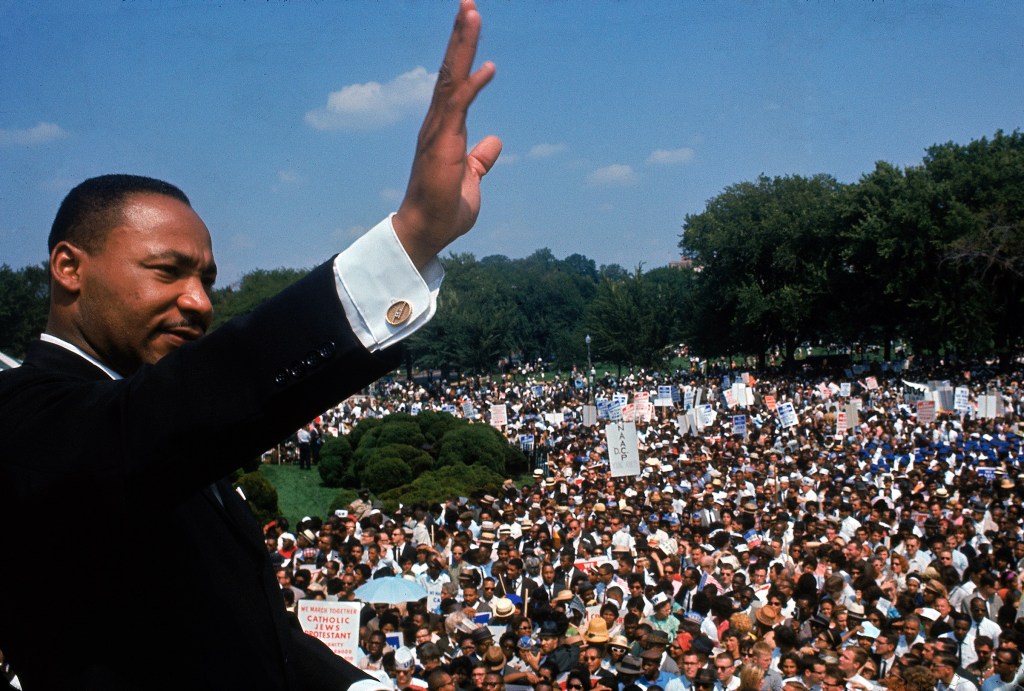
In late August of later this year, Martin Luther King Jr.’s “I Have A Dream” speech will mark its 60th anniversary. A photo of King at the national mall in Washington DC. (Photo provided by History)
This year’s Martin Luther King Jr. Day marks the eve of the 60th anniversary of his I Have A Dream speech later this summer. So, how have things changed since that warm summer day? In some ways, things have improved, while some things have yet to change, while still yet others make it seem like things have gone into full overdrive- but in reverse. Let’s take a look at what is what.
In the last 60 years, we’ve seen more inclusion in society, such as more representation of minority groups in media, from broadcast television, to shows on streaming providers, to larger events of historical significance, such as the election of the first African-American President of the United States, Barack Obama.
Granted, social change doesn’t occur overnight. Few things ever do. But one would hope as we have been progressing towards a more progressive society, one would think the backwards thinking of the days of Jim Crow would be far from the rearview mirror, right? Unfortunately, this doesn’t always seem to be the case.
While we’ve made great strides in inclusivity, we’ve also failed to make other progressive accomplishments, such as lowering the voting age when other efforts around the world have been making gains in those endeavors. Even for other rights, such as voting restoration for voters who’ve gained the right back after previously losing it or even basic abortion rights for young mothers, one has to wonder about the future progressive efforts, like addressing school violence & climate change concerns.
However, the more pressing & perhaps concerning are the more recent events involving racial inequality, such as the recent news stories about the need to remind society that Black Lives Matter, and the efforts involved in those events that have captured the headlines in recent memory.
African-American communities aren’t the only segments of society that are also affected by racism: Asian-Americans have also experienced their fair share of discrimination in recent years with respect to the COVID pandemic.
Recently, the Orange County Board of Supervisors declared racial inequalities that persist to be health crisis, demonstrating that many communities still have to grapple with challenges to address divides that affect contemporary individuals of modern society who hail from diverse backgrounds. These issues of race & intolerance continue against the backdrop of Martin Luther King’s Dream, showing that 60 years later, many of us may not have seen as much progress as we would like.
Clearly, there is much work to be done besides marking the three-score milestone speech from the one whose legacy we are observing this month and this very weekend in the United States going into the 60th year of making that Dream into a reality.
Martin Luther King provided a voice for the voiceless of his time, much like our efforts today are bringing voices to those who have none. We have to continue that legacy in our work as well, regardless of what particular segment of the human population we want to amplify. One of those main focuses should be enfranchising those who don’t already have a voice, so we don’t have to speak on their behalf, but can have a voice of their own to advocate for themselves.
Dreams don’t become realities unless dreamers put plans into action.
Jester Jersey
DavisKiwanian@mail.com
 #16ToVoteAdvocacyProject